
Introduction to Maa Baglamukhi
Maa Baglamukhi is revered in the Vedic tradition as the embodiment of Stambhana Shakti, the power to pause or immobilize negative tendencies. She is one of the ten Mahavidyas, representing the ultimate wisdom that clears confusion and brings clarity to the seeker’s mind. For those drawn to her form, devotional practices like the recitation of the Chalisa and the performance of the Aarti serve as profound ways to connect with her energy and invite stillness into one’s spiritual life. At Baglamukhi Guru, we emphasize that such practices are intended to cultivate inner discipline, reverence, and a deeper understanding of the self.
The concept of ‘Stambhana’ in the context of Maa Baglamukhi is frequently misunderstood. It is not about controlling others or exerting power over the external world; rather, it is about the internal mastery of one’s own volatile mind. By engaging in devotional practices, the seeker learns to immobilize the chatter of the ego, the turbulence of conflicting emotions, and the grip of ignorance. She is often depicted with a yellow complexion, holding a club and pulling the tongue of a demon—a metaphorical representation of silencing the false speech and the deceptive nature of the material world that keeps a soul trapped in cycles of confusion.
The Essence of Baglamukhi Chalisa
The Baglamukhi Chalisa is a poetic composition comprising forty verses dedicated to the goddess. It is designed to help the devotee focus their mind, center their thoughts, and express gratitude toward the Divine. Unlike requests for material gain, the recitation of a Chalisa is fundamentally a process of alignment. By chanting the verses, the practitioner seeks to harmonize their internal state with the qualities Maa Baglamukhi represents, such as truth, clarity, and unwavering focus. The rhythm and linguistic structure of the Chalisa act as a meditative anchor, guiding the practitioner away from the distractions of daily life.
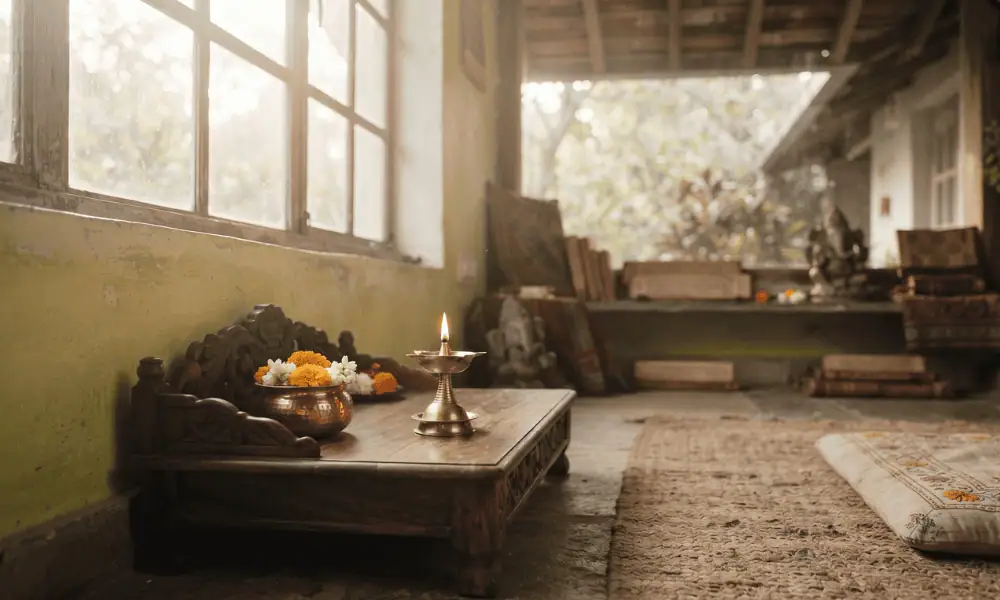
As you recite these forty verses, you are effectively entering into a structured flow of sound vibration. In Vedic sciences, sound is considered the primary manifestation of creation. The specific Sanskrit phonetics used in the Chalisa are designed to create a resonance within the body and the subtle energy fields. By focusing on the meaning of each stanza, you facilitate a psychological shift from restlessness to tranquility. It is this state of ‘stilled mind’ that allows for the reception of intuitive wisdom. For those seeking to include this practice in their daily routine, it is essential to approach the text with sincerity rather than as a transactional ritual. Traditional devotion is built on consistency and respect. Whether one recites it during the morning hours or as part of a quiet evening reflection, the goal remains the same: to create a sacred space in one’s heart where one can contemplate the wisdom of the Mahavidyas.
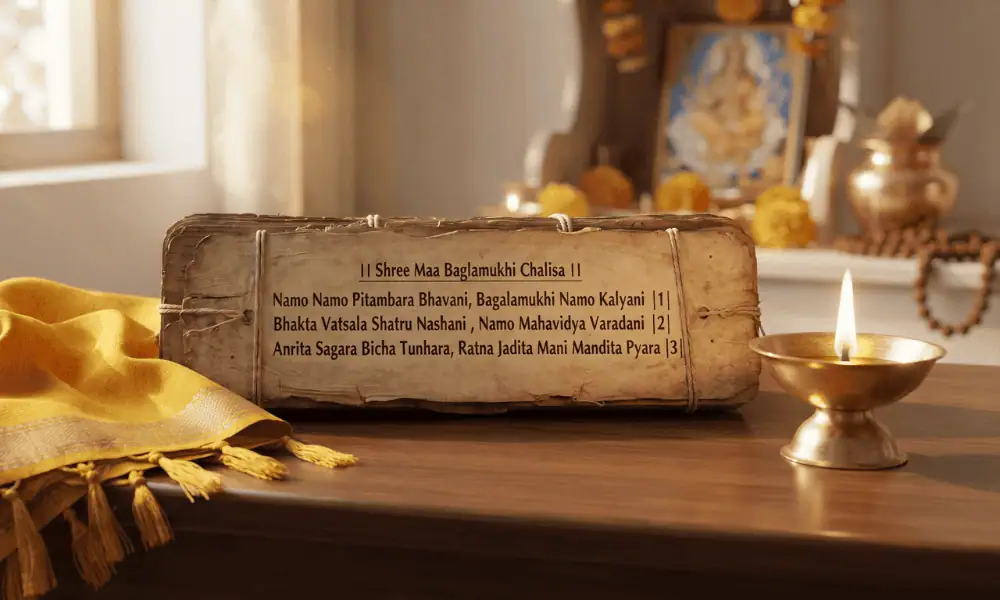
Understanding the Aarti Ritual
The Aarti is a beautiful culmination of a devotional session, representing the offering of light to the Divine. It is an act of surrendering one’s ego and acknowledging that all illumination in the world originates from the Source. Performing the Aarti after the Chalisa allows the practitioner to transition from the meditative state of recitation into a state of active offering. It is a moment of completion and gratitude.
In the Vedic tradition, the light of the lamp symbolizes the burning away of ignorance and the manifestation of knowledge. As you wave the lamp in front of the image or idol of the goddess, you are essentially acknowledging her presence as the inner guide. It is a simple yet powerful gesture that connects the physical realm with the subtle spiritual dimension. The motion of the lamp, typically in a clockwise direction, mimics the movement of the cosmos and signifies the integration of the soul into the universal order. By focusing on the flame, the devotee learns to stabilize their gaze—a practice of ‘Trataka’ that enhances concentration. You can find more information about these traditional practices by visiting our Baglamukhi Aarti guide.
Practical Guidance for Devotional Practice
When incorporating the Baglamukhi Chalisa with Aarti into your spiritual path, consistency is more important than length or complexity. A sattvik approach involves cleanliness, a quiet environment, and a focused mind. Begin by setting a dedicated space where you can sit comfortably. There is no need for grand displays; simplicity is often the most sincere form of worship. If you are just beginning your journey, it is beneficial to focus on understanding the meaning behind the prayers rather than rushing through the verses.
Developing a routine is the bedrock of spiritual discipline. When you choose a specific time and location, you create a conditioned response in your nervous system that helps you enter a meditative state more rapidly each time you sit down. Remember that devotion is a personal journey that unfolds over time. It is helpful to remain patient with yourself. If you find your mind wandering, gently bring your focus back to the words or the flame of the lamp. By maintaining this discipline, you will find that the practice eventually becomes a natural refuge from the stresses of modern existence. For those who appreciate the convenience of digital resources, you may find the Baglamukhi Chalisa PDF useful for keeping the text accessible during your daily recitations.
The Importance of Inner Clarity
Many seekers turn to the wisdom of the Mahavidyas to navigate complex situations in life. However, it is important to remember that the true power of these ancient traditions lies in their ability to sharpen our own discernment. Maa Baglamukhi represents the truth that stands behind all illusions. When we engage in prayer, we are asking to see the world as it is, without the bias of our own anxieties or desires. This inner clarity is the most precious gift one can receive through spiritual practice.
In the modern world, we are often overwhelmed by external noise and conflicting opinions. The practice of invoking the energy of Maa Baglamukhi helps in cutting through this ‘noise’ of the ego and societal expectations. It provides the seeker with the ‘sword of knowledge’ to discern what is permanent versus what is fleeting. We invite you to explore the meaning of Maa Baglamukhi to better understand her role in the Vedic path. By learning about her symbolism, you can approach the Chalisa and Aarti with a clearer perspective, recognizing that the primary objective of any such practice is the cultivation of a calm, truthful, and resilient spirit. Trust in the process of your own growth, and allow your devotional life to support your journey toward inner peace.
Cultivating a Sattvic Environment for Worship
The efficacy of any sadhana or devotional practice is often influenced by the environment in which it is performed. A ‘Sattvic’ (pure) environment is free from chaotic influences. Before beginning the recitation, it is recommended to ensure your physical space is clean and organized. This external order reflects a desire for internal order. The use of traditional items, such as a Ghee lamp, clean incense, or flowers, serves to engage the senses in a way that directs the mind toward the sacred. The scent of incense and the visual focus of the lamp serve as sensory cues that tell your brain it is time to shift focus from the mundane to the transcendent.
Beyond the physical space, consider the state of your mind. Approach the practice with humility. Avoid the common pitfall of treating the deity as a merchant from whom you are demanding favors. Instead, view the Mother as the source of all intelligence and grace. When you recite the Chalisa, treat each word as a syllable of truth. This shift in perspective transforms the practice from a task to be completed into a transformative experience that molds your character over time. As you deepen your connection, you will notice that the qualities of Maa Baglamukhi—clarity, courage, and discernment—begin to manifest in your daily life, helping you navigate challenges with a balanced heart.
Frequently Asked Questions
Is it necessary to perform the Aarti immediately after the Chalisa?
While many practitioners choose to perform the Aarti immediately after the Chalisa as a way to conclude their session, there is no strict rule dictating this sequence. The most important aspect of any devotional practice is the sincerity and focus you bring to the act. You may choose a structure that fits your personal schedule and allows you to maintain a state of calm reflection.
Can I listen to the audio instead of reading the text?
Listening to the audio of the Chalisa is a wonderful way to immerse yourself in the vibrations and rhythm of the sacred verses, especially if you are learning the correct pronunciation. However, active reading often helps in maintaining deeper concentration. A balanced approach of both listening and reading can be very effective for spiritual development.
What is the best time of day for these prayers?
Traditional Vedic practices are often performed during the Brahmamuhurta, which is the period before sunrise, or during the quiet hours of the evening. However, the best time is the one that allows you to offer your prayers without being rushed or distracted. Consistency at any time of day is far more valuable than adhering to a specific time while feeling pressured.
Do I need special materials or an idol to practice?
Devotion is ultimately an internal state of being, not a requirement of external items. While many people use an image or a lamp to help focus their attention, these are merely tools to support your concentration. Your dedication, respect, and intention are the essential ingredients of any prayer or ritual.
Does the recitation guarantee specific life outcomes?
Spiritual practices are intended to foster inner strength, mental clarity, and spiritual growth. They are not intended as substitutes for practical actions, professional advice, or medical care. By focusing on your spiritual well-being through the Chalisa and Aarti, you equip yourself with the patience and insight needed to handle life’s challenges more effectively.