
Understanding the Significance of the Pitambara Chalisa
In the vast ocean of Vedic literature, devotional verses known as Chalisa hold a special place for seekers. The Pitambara Chalisa is a dedicated set of forty verses composed in praise of Maa Baglamukhi, the eighth Mahavidya. For many practitioners, reciting these verses is more than a ritual; it is a way to align the mind with the stillness and power represented by the Mother Goddess. Maa Baglamukhi is often associated with the concept of Stambhana, which in a spiritual context, refers to the ability to quiet the fluctuations of the mind and find inner stability.
As you approach the Pitambara Chalisa, it is helpful to view the act of recitation as a form of meditation. By focusing on the attributes of the Goddess—her yellow attire, her radiant presence, and her role as a source of divine clarity—the devotee seeks to cultivate similar qualities within themselves. This practice is fundamentally about introspection, devotion, and the gradual deepening of one’s spiritual awareness. Whether you are a long-time practitioner or someone just beginning to explore the depths of Vedic traditions, understanding the spirit behind the verses can greatly enhance your devotional experience.
The Devotional Context of Maa Baglamukhi
Maa Baglamukhi is revered as a potent force that guides devotees toward truth and discernment. Her name, which combines ‘Bagla’ (derived from Valgam, meaning to bridle or rein in) and ‘Mukhi’ (face), signifies her power to tame the uncontrolled aspects of life. In our journey, we often face internal and external challenges that cloud our perception. Through the Baglamukhi Meaning, we understand that she is the personification of the pause that allows us to reflect, evaluate, and act with wisdom rather than impulse.
When engaging with the Pitambara Chalisa, remember that the goal is not to seek external validation or specific material outcomes, but to foster a sattvik environment within your own heart. Traditional practice emphasizes consistency, patience, and a humble attitude. It is not the mere recitation of words that carries significance, but the sincerity and reverence that accompany the act. By adopting a mindset of surrender and devotion, the practitioner opens themselves to the grace and guidance of the Goddess, finding solace in her divine presence.
How to Incorporate the Chalisa into Your Daily Practice
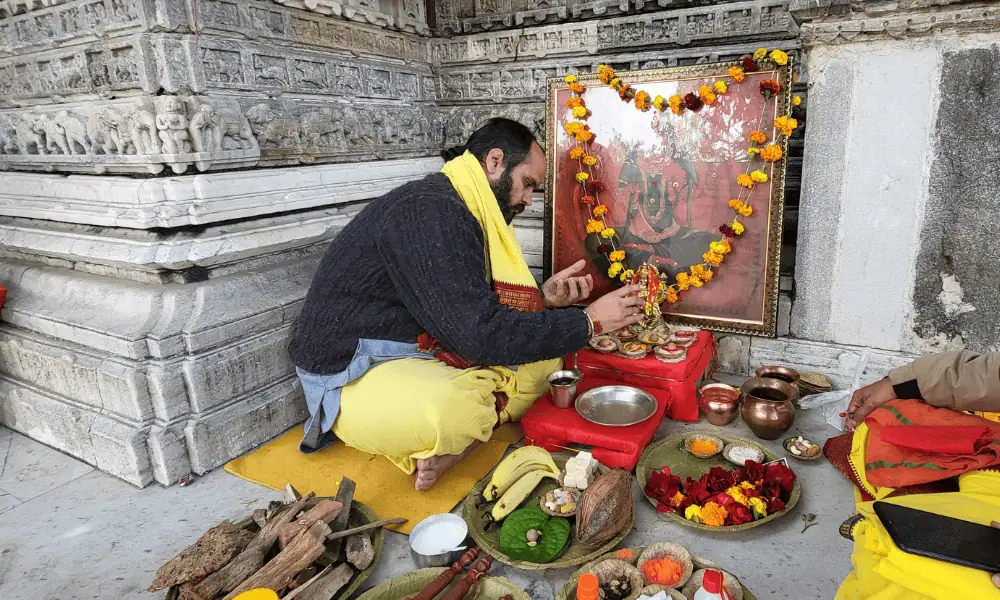
Integrating a new devotional practice into your life should be done with grace and simplicity. There is no rigid pressure to perform complex rituals to benefit from the wisdom of the Chalisa. Instead, focus on creating a small, peaceful space where you can sit comfortably and undisturbed. Before you begin, spend a few moments in silence, allowing the noise of the day to settle. This quietude is the foundation upon which your devotional practice is built.
While many look for the Pitambara Chalisa lyrics in Hindi, it is equally important to focus on the pronunciation and the underlying emotions while reading. If you are learning the verses, do not rush. Take your time to understand the meaning of each line, reflecting on the reverence expressed by the poet. Consistency is often more valuable than intensity. A short, daily session of recitation performed with a clear and focused mind is far more effective than an occasional, elaborate attempt.
For those interested in integrating this into a broader routine, consider practicing during the early morning hours, known as the Brahma Muhurta. This time is often considered conducive to spiritual reflection as the world remains quiet. However, the most important factor is your dedication. If a different time works better for your schedule, the Divine accepts your efforts as long as they are offered with genuine love and respect.
Exploring Traditional Devotional Practices
Beyond the recitation of verses, traditional Vedic practice encourages the use of various tools to aid concentration. For instance, many find value in a structured Baglamukhi Puja, which provides a framework for offering respect and gratitude. These practices are intended to help the practitioner maintain focus and keep their intentions aligned with sattvik principles. Remember that these rituals are symbolic; they serve as reminders of our path and our commitment to inner growth.
It is also beneficial to remember that the study of scripture and the recitation of hymns are meant to complement, not replace, our daily responsibilities. A balanced life is a spiritual life. By applying the wisdom gained from your devotional studies to your work, relationships, and personal character, you embody the essence of your devotion. Let the qualities of the Goddess—her unwavering truth and her ability to remain poised amidst chaos—be reflected in how you handle the challenges of everyday life.
Frequently Asked Questions
Is it necessary to follow specific rituals while reciting the Pitambara Chalisa?
While there are traditional guidelines for puja, the most important aspect of reciting the Chalisa is the sincerity and devotion you bring to the practice. You do not need to follow overly complex or burdensome rituals. Focus on maintaining a clean and quiet space, a calm frame of mind, and a respectful heart. Your internal intent is the most powerful component of your worship.
Can I listen to the Chalisa if I cannot read the Hindi text?
Yes, listening to the Chalisa is a wonderful way to connect with the devotional energy of the verses. Hearing the rhythmic flow of the language can help soothe the mind and deepen your concentration. As you listen, you might choose to follow along with the lyrics if they are available, or simply close your eyes and let the sounds foster a meditative state.
How often should one recite the Pitambara Chalisa?
There is no fixed requirement for the frequency of recitation. The best practice is one that you can sustain consistently over the long term. Many people choose to recite it daily as part of their morning routine, while others may set aside time during specific days of the week. Consistency is more meaningful than the volume of your practice, so choose a rhythm that supports your personal spiritual growth.
Should I learn the meaning of the verses?
Learning the meaning of the verses can significantly enrich your experience. When you understand what the words express, your recitation transforms from a mechanical act into an informed, heart-felt conversation with the Divine. It helps you grasp the deeper philosophy and the specific qualities attributed to Maa Baglamukhi, allowing you to meditate more effectively on those attributes during your practice.
Does the Pitambara Chalisa have to be recited in a temple?
The practice of reciting the Chalisa is not limited to temples. It is a deeply personal form of devotion that can be performed in the sanctity of your own home. A home shrine or a dedicated, quiet corner is a perfectly suitable place for your daily practice. What truly matters is the reverence you hold in your heart and the consistency with which you offer your time to the Divine.
Conclusion
The journey with the Pitambara Chalisa is one of patience and self-discovery. By engaging with these traditional verses, you are participating in a timeless practice that has offered solace to seekers for generations. May your dedication lead you to a state of greater clarity, inner peace, and stability. Always remember that the ultimate goal of any such Baglamukhi Chalisa practice is the refinement of one’s own character and the cultivation of a heart that remains steady regardless of external circumstances. Walk this path with humility, and allow the light of wisdom to guide your way forward.