
Introduction to the Baglamukhi Moola Mantra
In the vast ocean of Vedic traditions, certain sounds hold a unique place for their capacity to focus the mind and elevate the spirit. The Baglamukhi Moola Mantra is one such sacred vibration dedicated to Maa Baglamukhi, the eighth Mahavidya in the tradition of the Divine Mother. For those who seek to understand her essence, this mantra serves as a foundational bridge between the seeker and the divine energy of stillness and clarity. It acts as a sonic key that unlocks the latent potential within the practitioner, fostering a resonance with the cosmic order represented by the Goddess.
Approaching a mantra of this magnitude requires a mindset of humility and patience. It is not merely a collection of syllables to be recited mechanically, but a resonant frequency that aligns the practitioner with the qualities of Maa Baglamukhi. As you embark on the path of understanding this mantra, remember that the true strength lies in the sincerity of your devotion and the disciplined regularity of your practice. The mantra is viewed in tradition as a living entity, a manifestation of the Divine Mother herself, deserving of respect, focus, and a heart free from ulterior motives.
The Essence of Maa Baglamukhi
Before delving into the mantra itself, it is helpful to understand the deity behind the sound. Maa Baglamukhi is often revered as the goddess of Stambhana—the power to pause, reflect, and find clarity amidst chaos. Her nature is serene yet powerful, embodying the silent strength required to discern truth from illusion. For a more comprehensive look at her symbolism and divine identity, you may read about the meaning of Maa Baglamukhi.
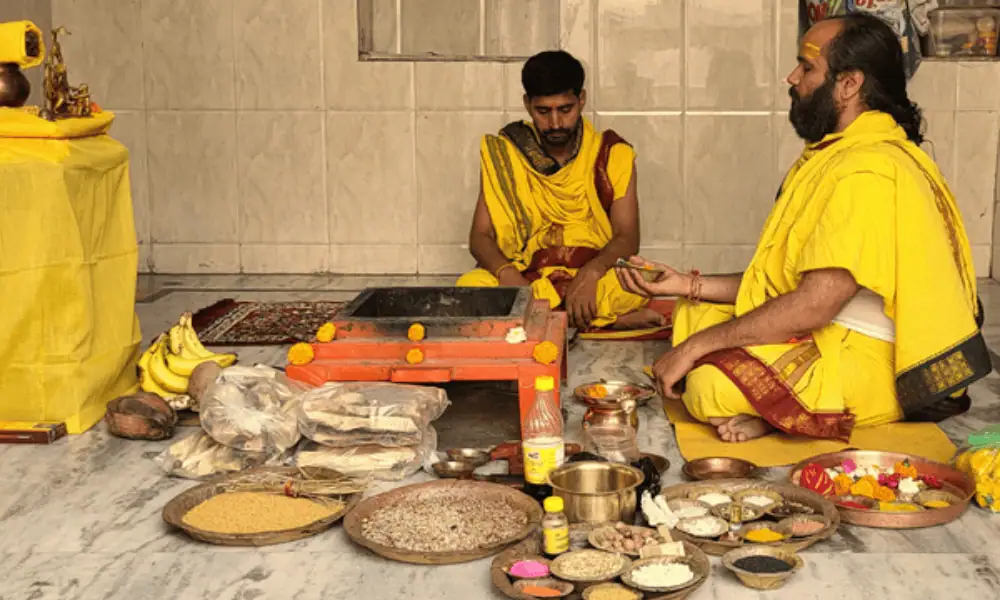
The Moola Mantra acts as an invocation of these divine attributes. In Vedic thought, the ‘Moola’ or ‘Root’ mantra contains the seed consciousness of a deity. By resonating with this seed, the practitioner invites a sense of inner order, helping to quiet the turbulent thoughts that often obscure our perception of reality. It is a practice of internal alignment rather than external acquisition. Maa Baglamukhi represents the ‘paralyzing’ force that stops the wandering mind, allowing the seeker to observe the transient nature of worldly phenomena without being perturbed by them. This quality of stillness is the foundational requirement for any profound spiritual progress.
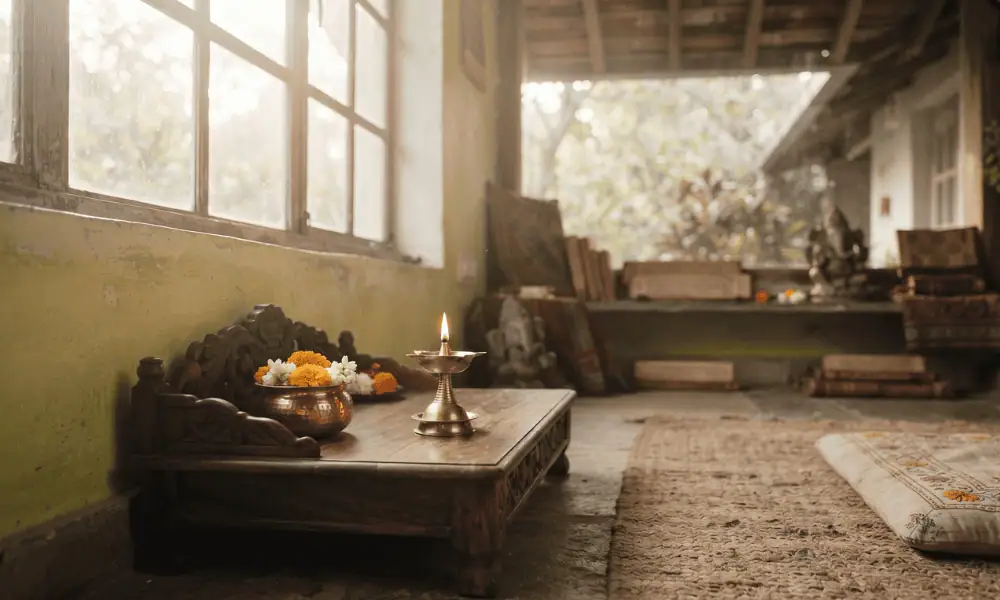
Understanding the Concept of Moola Mantra
A Moola Mantra is essentially the heartbeat of a deity’s worship. In the case of the Baglamukhi Moola Mantra, the linguistic structure is designed to harmonize the subtle energy centers of the body. When chanted with devotion, the focus shifts from the chatter of the ego to the expansive presence of the Divine Mother. This transition is subtle and occurs over time through consistent, heartfelt effort. The Moola mantra is often the first step in the systematic approach to Mahavidya sadhana, establishing a rhythmic foundation that allows the seeker to approach the deity with proper alignment.
Many seekers ask why the mantra is considered so significant. The answer lies in the Vedic understanding of ‘Nada Yoga’ or the yoga of sound. Sound is considered the primary manifestation of creation—the Omkara from which all phenomena emerge. By using specific, time-honored sounds associated with the goddess, we are tapping into a heritage of spiritual inquiry that has been passed down through generations. It is a way to honor the lineage and immerse oneself in the sattvik atmosphere of tradition. In this context, the mantra functions as a vessel, carrying the devotee from the mundane levels of consciousness to the higher, subtler planes where the divine presence is more palpable.
The Anatomy of the Sound
In the study of the Baglamukhi Moola Mantra, the phonetic precision is significant. Traditional scriptures emphasize that the efficacy of a mantra depends largely on the purity of intent and the clarity of the vibration produced. The Sanskrit syllables are not random; they are constructed to create specific resonances within the pranic body. By focusing on the acoustic vibration, the practitioner minimizes mental fluctuations. As one continues to chant, the sound begins to vibrate not just in the throat, but throughout the subtle architecture of the energy channels. This is the goal of a Moola mantra: to refine the internal vessel so that it may resonate with the divine frequency of the Mahavidya.
Approaching the Mantra with Respect
Devotion to Maa Baglamukhi is a deeply personal and quiet journey. There is no need for grand displays or complex expectations. Instead, the focus should remain on maintaining a calm, focused, and pure environment. The purpose of reciting any mantra is to cultivate a state of mind where one can better perceive the subtle guidance of the Divine. If you are beginning your journey, consider how to integrate the traditional practice of mantras into your daily routine by focusing on correct pronunciation and a steady pace. Treating the space and the self with cleanliness is a reflection of the inner sanctity one seeks to attain.
It is important to remember that mantras are tools for inner transformation. They are not intended to replace practical actions or professional advice in your daily life. Whether you are navigating personal challenges, seeking emotional balance, or simply looking to deepen your spiritual practice, the mantra serves as a grounding force. It keeps your intention aligned with truth and patience, allowing you to face life’s complexities with a balanced heart. Approaching the deity with a sense of surrender, acknowledging that the Divine Mother is the source of all intelligence and wisdom, fosters the necessary humility for the mantra’s efficacy to blossom.
The Importance of Consistency
The beauty of the Baglamukhi Moola Mantra lies in its rhythmic nature. When practiced with dedication, it becomes a sanctuary of peace within the mind. Consistency is far more valuable than intensity. Even a few minutes of focused, heartfelt recitation each day can create a positive ripple effect in your consciousness. The aim is to make this practice a natural part of your day, akin to breathing, where you feel the presence of the Mother in every action. Over time, the mantra ceases to be something you ‘do’ and becomes something that ‘happens’ through you, becoming an integral part of your mental landscape.
As you progress, you may find that your perspective on life begins to shift. You might notice a greater capacity for patience, a clearer ability to observe situations without being swept away by immediate reactions, and a deeper sense of contentment. This is the natural outcome of a meditative life dedicated to higher principles. Treat your practice as a sacred dialogue between yourself and the Infinite, maintaining a tone of gratitude throughout. The journey is not one of achieving a goal, but of uncovering the truth that already resides within the stillness of your own consciousness.
Cultivating the Sattvik State
The efficacy of the Baglamukhi Moola Mantra is deeply intertwined with the lifestyle and temperament of the seeker. Traditional wisdom suggests that a sattvik (pure) lifestyle supports the meditative practice. This involves cultivating simplicity, truthfulness, and compassion in one’s dealings with the world. When the mind is free from excessive desire or agitation, the mantra takes hold more quickly, creating a meditative field that is resilient against external pressures. By aligning one’s actions with these values, the seeker creates a harmonious resonance between their external life and their internal devotional practice, effectively turning every moment into a potential meditation.
Integrating Practice into Daily Life
Many practitioners find that their meditation is enhanced when they understand the broader context of their devotion. Engaging with traditional texts or hymns can provide that depth. If you are interested in exploring further, you can visit our page on the significance of the Baglamukhi Stotram, which complements the practice of the Moola Mantra by offering a more descriptive and devotional approach to the goddess’s form and qualities.
Ultimately, the Baglamukhi Moola Mantra is a path back to oneself. It is a reminder that beneath all the noise of the world, there exists a place of perfect stillness. By connecting with this, you are not creating anything new; you are simply unveiling what has always been there. Walk this path with care, respect the traditions that have preserved these sounds, and keep your focus on the grace of the journey itself. As you deepen your relationship with the Divine Mother, you will find that the mantra provides a comforting sense of orientation in an ever-changing world, guiding you back to the center of your being where clarity and peace reside.
Frequently Asked Questions
What is the primary purpose of the Baglamukhi Moola Mantra?
The primary purpose is to invoke the divine energy of Maa Baglamukhi to cultivate inner clarity, stillness, and a balanced mind. It is a meditative tool used to help the practitioner discern truth and maintain composure in challenging situations.
Do I need special initiation to recite this mantra?
While formal initiation from a qualified guru is a traditional hallmark of deep Vedic practice, anyone can begin with a sincere and respectful heart. Starting with a humble, meditative approach and focusing on the correct, respectful pronunciation is an appropriate way for beginners to explore the mantra.
How long does it take to see results from chanting?
Spiritual practice is a personal journey rather than a transactional process. Results are defined by the positive transformation of your own mind and character. Rather than looking for immediate outcomes, focus on the regularity of your practice and the inner peace you feel during the recitation.
Can I chant the mantra anywhere at any time?
While the mantra can be recited silently in any state of mind, it is most effective when done during a dedicated time and in a clean, quiet space. Setting aside a specific moment each day for your practice honors the tradition and helps the mind settle more quickly into a meditative state.
Should the mantra be recited aloud or silently?
Both methods are valid depending on the stage of your practice. Loud recitation (Vaikhari) is helpful for beginners to focus on the sound and pronunciation. Silent, mental recitation (Manasika) is often considered more powerful for deeper meditation as it directs the energy inward and minimizes distractions.