
Introduction to the Sacred Sound
In the vast ocean of Vedic wisdom, mantras serve as potent focal points for meditation and spiritual alignment. Among these, the Om Hleem Baglamukhi mantra holds a unique position. It is not merely a combination of syllables, but a vehicle for attuning the mind to the energy of Maa Baglamukhi. As the eighth Mahavidya, she represents the power of stillness and the suspension of duality, guiding seekers toward clarity and inner poise. The tradition of Mahavidyas is an ancient path that seeks to dissolve the ego and align the human spirit with the cosmic order, often referred to as Rta. By engaging with this mantra, one steps into a lineage of deep reflection, where the sounds themselves act as mirrors to the soul.
Understanding the mantra requires a shift in perspective. Instead of viewing it as a tool for worldly gain, one should approach it as a devotional practice intended to quiet the fluctuations of the mind. At Baglamukhi Guru, we believe that the true essence of any mantra lies in the practitioner’s sincerity, respect, and consistent dedication to the path of self-realization. This journey is not about manipulating the external environment, but about transforming the internal one, creating a sacred space where wisdom can flourish amidst the noise of modern life.
The Core Components of the Mantra
The mantra is composed of several powerful seed sounds, or Beej Aksharas, which are said to resonate with specific aspects of cosmic consciousness. ‘Om’ is the primordial sound, the vibration from which all existence arises. It signifies the union of the individual soul with the universal divine, acting as a gateway to all meditative practices. It sets the foundation of silence from which all speech, including the subsequent seed sounds, emerges.

‘Hleem’ is specifically associated with the energy of Maa Baglamukhi. In traditional Tantric and Vedic thought, this sound is often connected to the principles of ‘Stambhana’—not in the sense of force, but in the sense of bringing stillness to a restless or chaotic mind. It is a sound that encourages the practitioner to pause, observe, and find the eye of the storm within themselves. This stillness is not a state of inactivity; rather, it is a dynamic state of total presence, where one is fully conscious yet completely unburdened by reactive thoughts or emotional turmoil.
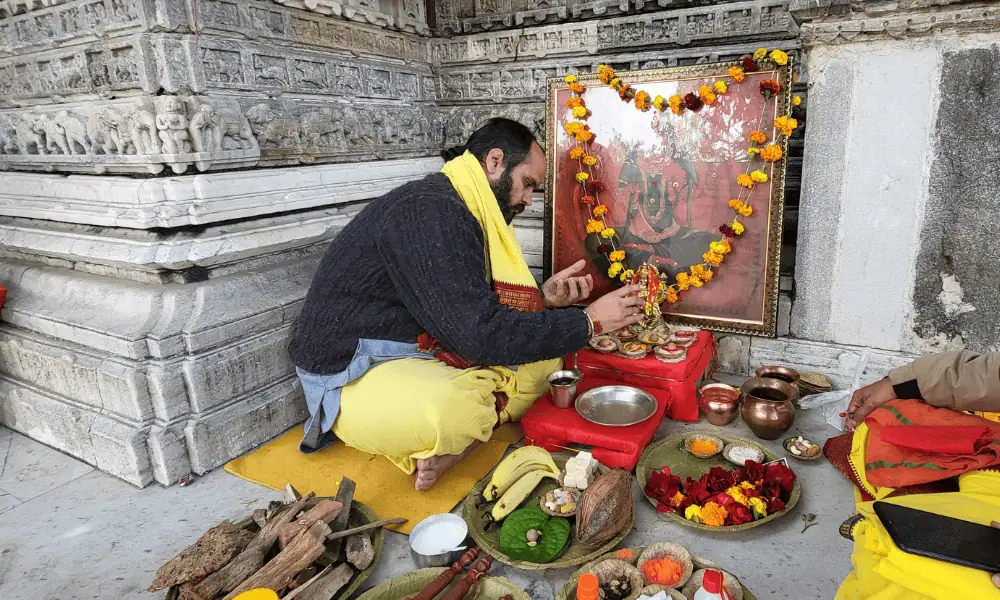
When these sounds are combined with the name of the deity, they form a cohesive structure that aids in concentration. The repetition of this mantra is traditionally used to cultivate internal focus. By chanting with awareness, the seeker aims to align their consciousness with the stillness that Maa Baglamukhi represents, helping to transcend emotional turbulence and intellectual confusion. The synergy of ‘Om’ and ‘Hleem’ acts as a harmonic bridge, connecting the practitioner to the archetypal energy of the Divine Mother as the destroyer of ignorance and the stabilizer of the mind.
The Significance of Meaning in Devotional Practice
Many practitioners often ask about the direct translation of the Om Hleem Baglamukhi mantra with meaning. It is important to realize that Sanskrit mantras are considered sonic symbols rather than standard sentences. While they possess profound philosophical implications, their primary value lies in the frequency and the intentionality they evoke during meditation. Unlike prose, where definitions are rigid, the language of mantra is fluid, designed to bypass the intellectual mind and speak directly to the intuitive awareness.
The meaning, in a devotional context, is rooted in the seeker’s relationship with the Divine Mother. It is an expression of surrender to the power that brings order to chaos. By chanting this mantra, one is essentially inviting the quality of ‘divine stillness’ into their life. This is not about silencing the world, but about developing the inner stability to remain centered regardless of external circumstances. For those beginning their journey, you can deepen your understanding of these traditions by exploring the Meaning of Maa Baglamukhi, which provides valuable context on her role as a source of divine clarity. Recognizing her as the goddess who ‘paralyzes’ or ‘stills’ the ego allows the practitioner to view her not as a figure of fear, but as a protector who removes the obstacles of delusion that prevent the experience of one’s true nature.
Traditional Approaches to Mantra Japa
Traditional practice emphasizes the importance of regularity and a sattvik (pure) mindset. Mantra Japa, or the repetitive chanting of the mantra, is meant to be a steady, calming process. Many practitioners find that choosing a quiet time, such as during the dawn or dusk hours (Sandhya), helps in maintaining a focused atmosphere. During these times, the atmosphere is naturally conducive to stillness, making it easier to slip into a meditative state. It is encouraged to sit in a stable, comfortable posture, such as Sukhasana or Padmasana, ensuring the spine is upright to allow the subtle energy to flow freely.
It is not necessary to count thousands of repetitions to find benefit. Consistency, focus, and a heart filled with devotion are more significant than volume. Many seekers also integrate other traditional forms of worship, such as the Maa Baglamukhi Mantra practice, to complement their daily routine. The goal is to make the mantra a part of one’s consciousness, rather than an isolated task performed in haste. When you chant, allow the sound to resonate within your body, feeling the vibration of the syllables. This somatic connection helps anchor the mind, preventing it from wandering into past regrets or future anxieties.
Furthermore, the cultivation of ‘shraddha’ or faith is paramount. Faith is not blind belief; it is the confidence born from a sincere attempt to connect with the divine. As you progress, the mantra often shifts from being a sound you ‘do’ to a sound you ‘witness’. If you are ever overwhelmed by the complexity of these traditions, return to the basics: sit quietly, breathe deeply, and offer your efforts to the Divine Mother with honesty and humility. This simplicity is the bedrock upon which the most profound spiritual experiences are built.
The Role of Mindful Intent and Ethical Conduct
Spiritual practice is intimately linked with one’s lifestyle and ethical choices. Chanting a mantra while holding onto anger, resentment, or deceit is counterproductive to the goal of inner stillness. The tradition encourages ‘Samyak Karma’—right action. When you practice the Om Hleem Baglamukhi mantra, you are implicitly committing to a process of internal purification. This means being mindful of your words, your intentions towards others, and your general demeanor in daily interactions. A mind that is calm and compassionate is a fertile ground for the mantra’s energy to take root.
As you deepen your practice, you may notice shifts in how you perceive challenges. Situations that once triggered intense emotional reactions may begin to feel more manageable. This is the ‘stambhana’ power of the mantra working at a psychological level—not by suppressing emotions, but by providing the space to respond with wisdom rather than reacting with impulse. It is essential to treat your spiritual life as a holistic endeavor. Whether you are studying the sacred texts or sitting in silent meditation, each action is an offering, a way to move closer to the source of all being.
Maintaining a Sattvik Perspective
In the modern world, the temptation to look for shortcuts or immediate results is common. However, the Vedic tradition teaches us that spiritual growth is a gradual process that requires self-discipline. Avoid viewing mantras as magical formulas that replace the need for ethical living, practical action, or professional support. A healthy spiritual practice supports your overall well-being and enhances your ability to navigate life’s challenges with grace and wisdom. True progress is measured by the reduction of internal friction and the increase in one’s capacity for equanimity.
Approaching your devotions with a balanced mindset ensures that you stay grounded. If you find yourself seeking more resources, utilize the Mantra PDF guides available on our platform to help you structure your learning. Always prioritize your mental peace and emotional stability over external goals. By doing so, you honor the tradition and the reverence it deserves. Remember that the Mahavidyas are aspects of the supreme consciousness; honoring them is, in essence, honoring the divine potential within yourself. Treat your daily practice as a sacred appointment, a time to disconnect from the external demands and reconnect with the eternal stillness that defines the core of your being.
Frequently Asked Questions
What is the primary purpose of the Om Hleem Baglamukhi mantra?
The primary purpose is to aid the seeker in achieving inner stillness and mental clarity. It is used as a meditative tool to help calm a restless mind and align oneself with the divine energy of Maa Baglamukhi, who symbolizes the power of stability and order.
Do I need an initiation to chant this mantra?
While formal initiation from a teacher is considered a cornerstone in many traditional lineages, a respectful devotional practice can be started with sincerity and a clean, sattvik lifestyle. Always approach your practice with humility, reverence, and a focus on self-improvement.
How long should I chant this mantra daily?
There is no fixed duration that guarantees a specific outcome. The most important aspect is consistency and the quality of your focus. Start with a duration that you can maintain daily without feeling rushed, such as 15 to 20 minutes, and focus on the pronunciation and the sound rather than the quantity.
Can this mantra help in solving my life’s problems?
The mantra is a spiritual tool designed to help you gain the mental and emotional strength to face life’s challenges. It does not act as a substitute for professional advice, medical treatment, or practical effort. It is meant to provide the internal peace and clarity needed to make wise, informed decisions in your daily life.
Conclusion
Engaging with the Om Hleem Baglamukhi mantra is an invitation to witness the deeper levels of one’s own consciousness. As you continue your practice, may you find the stillness that resides within, and may your journey be marked by increasing clarity and peace. Approach this tradition with a warm, open heart, and let the process unfold at its own natural pace. By consistently nurturing this connection, you allow the divine influence of Maa Baglamukhi to permeate your life, guiding you toward a state of lasting equanimity and spiritual depth.