
Introduction to the Sacred Mantra
The mantra “Om Hleem Baglamukhi Sarva Dushtanam Vacham Mukham Padam Stambhaya” occupies a central place in the devotional traditions surrounding Maa Baglamukhi. For those who seek to understand the depth of Vedic practices, exploring such powerful syllables offers a path toward clarity, focus, and inner stillness. At Baglamukhi Guru, we believe that understanding the intent behind a mantra is as essential as its repetition, as it bridges the gap between mechanical sound and spiritual connection.
This specific arrangement of words, often associated with the eighth Mahavidya, is steeped in ancient symbolism. By looking into the nuances of this invocation, practitioners can align their hearts with the qualities that Maa Baglamukhi represents, which include the power of discernment and the ability to find stillness amidst the noise of the world. The mantra acts as a linguistic key, designed to help the seeker unlock a deeper reservoir of inner stability, transforming turbulent energy into a source of focused reflection.
The Significance of the Mantra Elements
To grasp the essence of the “Sarva Dushtanam Vacham Mukham Padam Stambhaya” mantra, one must look at the constituent parts of this invocation. Each syllable is traditionally considered a reservoir of spiritual energy. The prefix “Om” acts as the universal foundation, grounding the practitioner in the vastness of the absolute. It is the primordial vibration from which all creation emanates. Following this, “Hleem” is the Bija mantra associated with the Goddess, often described in spiritual literature as the vibration that governs the energy of paralyzing or stanching that which is turbulent or unaligned.
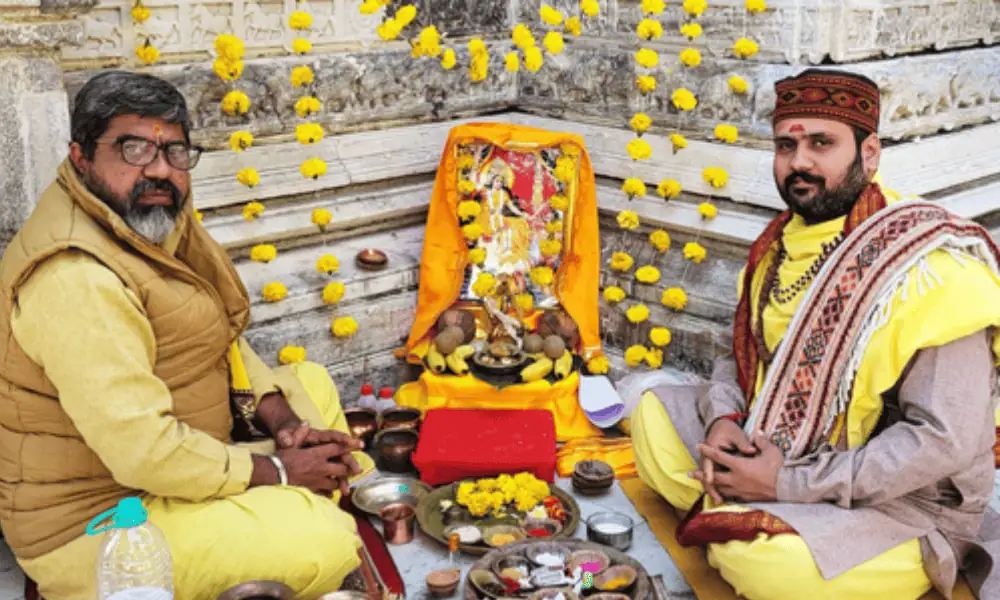
The phrase “Sarva Dushtanam” is frequently interpreted in a devotional context as a request for help in overcoming internal obstructions or negative patterns that disrupt one’s spiritual progress. In traditional Vedic thought, such barriers are often termed as ‘dushtanam,’ which, rather than referring to external enemies in a mundane sense, refers to the ego, ignorance, or the restless thoughts that prevent us from seeing the truth clearly. By reciting these words with sincerity, the devotee seeks to quiet these internal disturbances, effectively asking for the grace to transcend personal limitations.
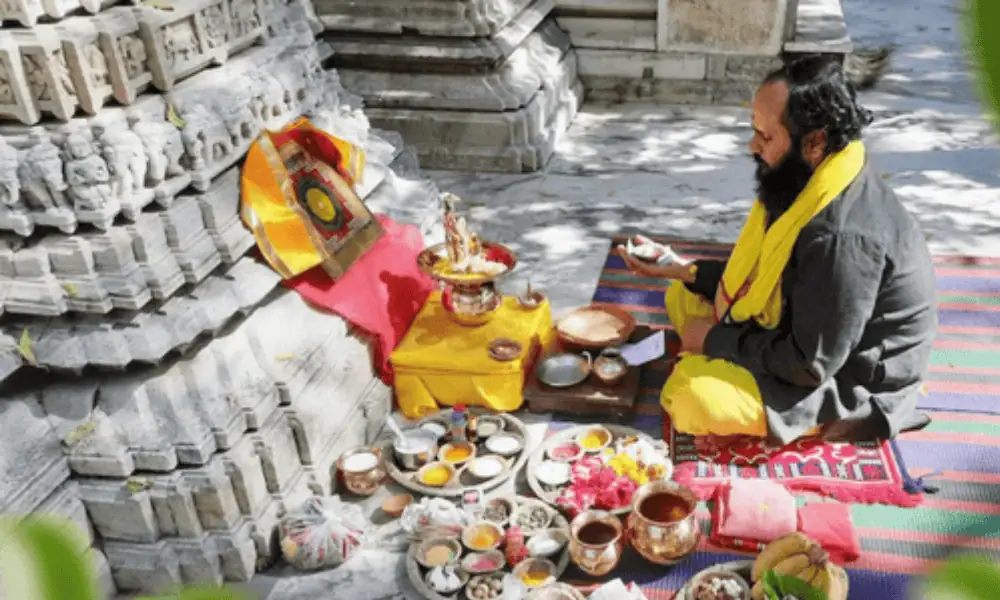
Finally, “Vacham Mukham Padam Stambhaya” carries the essence of bringing about a state of stillness or ‘stambhana.’ In the context of spiritual growth, this represents the desire for control over one’s own speech and mind, ensuring that one’s words remain truthful, compassionate, and aligned with dharma. It is a request for the grace to silence unnecessary chatter and to steady the mind, allowing wisdom to surface. Through this stambhana, the seeker learns to freeze the rapid, reactive movements of the mind, creating space for deeper meditation and divine intuition.
The Role of Sound in Vedic Tradition
In the Vedic tradition, mantras are not merely poetic verses but are considered energetic frequencies. The chanting of these sounds is meant to resonate within the subtle energy body of the practitioner. When one articulates “Vacham Mukham,” they are specifically addressing the energy of communication. This is deeply symbolic, as speech is often the first thing that betrays our inner instability. By focusing on the ‘mukham’ (the mouth/opening of speech), the mantra encourages the practitioner to cultivate ‘vak shakti’—the power of truthful, measured speech. This is not about forced silence, but rather the cultivation of a conscious awareness that precedes every word we speak.
The repetition of this mantra is considered a cleansing process. As the vibration moves through the practitioner, it is thought to gradually clear the mental ‘clutter’ that accumulates through daily interactions with the world. This is the essence of why traditional practitioners value the audible and silent repetition of the sounds; the frequency itself is viewed as a tool for attuning one’s awareness to the frequency of the Goddess.
Devotional Practice and Mindset
Approaching any mantra requires a mindset of humility and reverence. At Baglamukhi Guru, we emphasize that the practice of chanting is not a transactional exchange but a meditative journey. It is a way to focus the wandering mind on the presence of the divine. When engaging with the “Sarva Dushtanam Vacham Mukham Padam Stambhaya” mantra, it is recommended to maintain a calm, clean, and quiet environment where one can sit comfortably without distractions. The environment acts as a mirror for the internal state; a peaceful space fosters a peaceful mind.
Regularity and consistency are often considered more valuable than intensity. A short, focused period of reflection each day can be deeply nourishing. This practice encourages the devotee to cultivate patience, as the fruits of spiritual dedication are internal—they manifest as increased self-awareness, emotional balance, and a clearer perspective on life’s challenges. Remember that the goal is not to force a specific outcome but to align oneself with the sattvic energy that the Goddess embodies. You can find more foundational information on her symbolism by reading about the Baglamukhi Meaning.
Integrating Mantra into Daily Life
Beyond the formal practice, the spirit of this mantra can be integrated into one’s daily existence. The core of this invocation—the restraint of speech and the cultivation of inner peace—is a practice for all times. When we find ourselves in situations that stir anger, confusion, or reactive speech, pausing to recall the essence of the mantra can help us regain our composure. This act of pausing is, in effect, a living embodiment of the ‘stambhana’ quality—the power to stop or pause before reacting impulsively.
Practitioners often find that as they cultivate the habit of this mantra, they become more aware of the ‘dushtanam’ or the negative impulses that arise within their own consciousness. This heightened awareness is the first step toward spiritual maturity. By observing our reactions without judgment, we allow the grace of the mantra to act as a witness. For those interested in exploring the broader dimensions of this path, learning about the Baglamukhi Mantra practices can offer further insights into how these vibrations influence the meditative state. Engaging with these traditions thoughtfully helps in building a life of integrity, where one’s actions are guided by conscious intent rather than habit or impulse.
Cultivating the Virtue of Discernment
One of the primary attributes of Maa Baglamukhi is her role as the grantor of ‘stambhana shakti,’ which includes the power of discerning truth from falsehood. In a world full of conflicting information, our ability to discern what is beneficial for our soul and what is merely a distraction is vital. The mantra serves to sharpen this faculty. When we chant, we are effectively asking the Goddess to help us ‘stop’ the movement of false perceptions. We learn to identify the ‘dust’ of ignorance that obscures our vision. By consistently returning to the mantra, we train our consciousness to remain anchored in the truth, regardless of the chaos that may surround us externally.
This discernment also extends to our interactions with others. It enables us to listen more intently, to see beneath the surface of words, and to understand the deeper intent behind communication. This is a subtle yet profound shift in perspective that transforms the practitioner into a more empathetic and grounded individual. The focus remains, as always, on internal refinement, allowing the external world to be influenced by the presence of a centered and peaceful heart.
Maintaining a Sattvic Perspective
In any spiritual pursuit, it is vital to keep one’s intentions pure. Sattva, or goodness and harmony, should be the guiding principle. Avoid viewing the mantra as a tool for manipulation or for exerting control over others. Such motives are contrary to the teachings of the Mahavidyas, who represent the ultimate truths of the universe. True spiritual strength comes from self-mastery, not from external influence. When we approach Maa Baglamukhi with a desire for internal clarity and growth, we open ourselves to the grace that supports our journey toward self-realization.
Always remember that spiritual practices are supportive of our human life, not a replacement for practical action. Whether you are dealing with a difficult situation at work, a challenging relationship, or personal internal struggles, use your wisdom, seek professional guidance where appropriate, and apply your efforts in the real world. Mantra practice serves as the steadying force that provides the mental fortitude needed to act with wisdom and patience in all circumstances.
Frequently Asked Questions
What does it mean to recite the mantra for ‘stambhana’?
In the context of Vedic tradition, ‘stambhana’ refers to the quality of stillness or binding. In spiritual practice, this is interpreted as the ability to stop the flow of distracting thoughts, silence reactive speech, and steady the mind. It is a practice of finding deep internal quietude.
Is this mantra suitable for everyone to practice?
Traditionally, mantras associated with the Mahavidyas are approached with respect and, if possible, under the guidance of a teacher. The most important requirement is a sincere, humble, and sattvic heart. You may explore the Baglamukhi Puja traditions to understand how these devotional practices are generally structured.
How long should I practice this mantra daily?
There is no fixed requirement, as the quality of your focus matters more than the duration. Many find that 15 to 20 minutes of dedicated, uninterrupted time is a sustainable and effective way to begin. Consistency is the key to creating a meaningful spiritual habit.
Can this mantra help me gain control over others?
The practice of this mantra is intended for internal self-mastery, spiritual growth, and the regulation of one’s own speech and thoughts. It is not designed to control or manipulate others. Approaching it with selfish or harmful motives is discouraged, as it moves the practice away from the sattvic path of self-realization.
Conclusion
The mantra “Om Hleem Baglamukhi Sarva Dushtanam Vacham Mukham Padam Stambhaya” serves as a profound tool for the seeker. It calls upon the energies of Maa Baglamukhi to guide us toward a state where our internal discourse is aligned with truth and our minds are calm. By approaching this practice with reverence, consistency, and a desire for inner transformation, you can find a steady anchor in the midst of life’s complexities. At Baglamukhi Guru, we hope this overview helps you walk your spiritual path with clarity and peace.