
Understanding the Significance of Baglamukhi Anushthan Vidhi
The practice of the Baglamukhi Anushthan Vidhi is a profound journey of devotion and spiritual focus dedicated to Maa Baglamukhi. Within the Vedic traditions, an Anushthan is not merely a ritual but a dedicated period of disciplined worship, aimed at cultivating inner clarity, patience, and a deeper connection with the Divine. When a devotee undertakes this path, the intent is primarily to align their mind and spirit with the energy of the goddess, who is revered as the embodiment of Stambhana—the power to still or immobilize negativity and confusion. This sacred practice is anchored in the Vedic understanding that external stillness is a reflection of an internal state of grace.
It is important to approach the concept of the Baglamukhi Anushthan Vidhi with a clear understanding of its purpose. In the context of Baglamukhi Guru, we emphasize that such practices are meant for spiritual elevation and self-reflection. The goal is to develop the inner strength to navigate life’s challenges with poise rather than seeking external or material outcomes. By engaging in this structured devotion, a seeker practices patience and sincerity, which are the cornerstones of any meaningful Vedic ritual. This discipline serves to cleanse the mental faculties, allowing the practitioner to perceive reality beyond the veil of personal ego and temporary emotional turbulence.
The Essence of Devotional Preparation
Preparation for an Anushthan begins long before the actual recitation or puja. A traditional, sattvik approach suggests that the environment and the practitioner’s state of mind are just as important as the mantras themselves. Cleanliness of the physical space, a calm atmosphere, and a focused intention are essential. Many practitioners find that starting with a clear understanding of the deity helps foster a more genuine devotional experience. You can learn more about the significance of the goddess by visiting our page on who is Maa Baglamukhi.

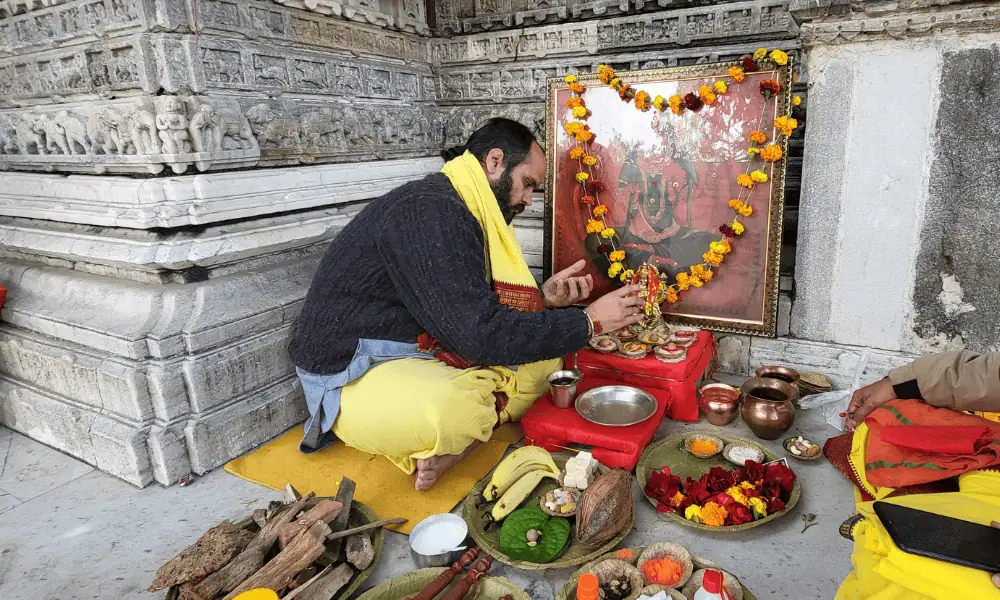
During an Anushthan, the rhythm of one’s daily life is usually adjusted to accommodate periods of silence, meditation, and recitation. This is not intended to remove a person from their worldly responsibilities, but rather to teach them how to perform those responsibilities with a detached and focused mind. The discipline of keeping a specific count of mantras or adhering to a set schedule for several days helps the practitioner move beyond the distractions of the ego. Creating a dedicated space—a sanctuary of sorts—where one performs the same rituals at the same hour each day, establishes a rhythmic connection that deepens the spiritual experience over the duration of the Anushthan.
The Role of Sankalpa in Spiritual Practice
Central to any formal Anushthan is the concept of ‘Sankalpa’, or the firm resolve. Before commencing the ritual, the practitioner makes a mental or verbal commitment, declaring their intention to engage in this sadhana. In the context of Maa Baglamukhi, this Sankalpa is not a demand but a dedicated promise to maintain purity, consistency, and focus throughout the period of the practice. It is the spiritual anchor that holds the practitioner steady when the mind seeks to wander or when daily lethargy creeps in.
The Sankalpa defines the duration, the frequency of mantras, and the internal state the seeker aspires to maintain. It is a moment of total honesty with the Divine, acknowledging one’s limitations while simultaneously committing to the practice as a form of sacred service. By setting a clear intention, the practitioner prepares their subconscious mind for the transformative journey ahead, ensuring that every word spoken and every action taken is imbued with purpose and reverence.
Understanding the Role of Mantra and Puja
The core of the Baglamukhi Anushthan Vidhi often revolves around the recitation of specific mantras and the performance of daily puja. These are not tools for manipulation or for achieving quick fixes for complex life problems. Instead, they serve as focal points that help the mind rest in the presence of the divine. When a practitioner repeats a mantra, it is an exercise in continuity and surrender, allowing the sounds to resonate within their own consciousness.
Traditional rituals, such as those performed during an Anushthan, are designed to create a bridge between the finite and the infinite. By offering flowers, light, and incense, the devotee acknowledges the presence of the Divine in all things. If you are beginning your journey, it is helpful to understand the foundational practices of worship. Exploring the details of traditional Baglamukhi puja can provide a broader context for how to structure your daily practice with respect and humility. Each step of the puja—from lighting the lamp, which symbolizes the removal of ignorance, to the offering of fragrance, which represents the spread of divine virtues—serves to harmonize the practitioner’s internal energy with the external act of worship.
Approaching Rituals with a Sattvik Mindset
In the Vedic tradition, a sattvik mindset is characterized by clarity, balance, and purity. An Anushthan is most effective when the practitioner maintains a heart filled with gratitude rather than expectation. It is common for people to wonder about the outcomes of their efforts; however, the true success of an Anushthan is measured by the change within the practitioner—a quieter mind, a more patient outlook, and an increased capacity for empathy. Cultivating this sattvik temperament requires deliberate effort, choosing thoughts and actions that are truthful, non-violent, and calm.
When you sit for your practice, try to let go of the need for immediate change in your external circumstances. Life is complex, and many factors influence our path. Rituals are a way to sustain your spirit while you work through these complexities in the real world. By keeping your heart open and your intentions pure, you honor the tradition and allow the spiritual practice to have its natural, subtle, and profound effect over time. This approach transforms the ritual from a mere exercise into a transformative spiritual pilgrimage, where every day of the Anushthan brings a deeper layer of awareness and inner stability.
The Importance of Consistency and Patience
One of the most frequent challenges in an Anushthan is maintaining consistency. Life often presents obstacles, and keeping to a disciplined routine can be difficult. Yet, it is within this struggle for consistency that much of the spiritual growth occurs. Each day that a practitioner returns to their mat or their prayer space, they are reaffirming their commitment to inner peace. This discipline is a form of tapasya, or self-discipline, which is highly regarded in the pursuit of spiritual maturity. Patience is the silent companion of consistency; it is the understanding that growth—like a seed germinating under the soil—happens in ways that are not always immediately visible.
Remember that the path of the seeker is long and varied. There is no shortcut to inner wisdom, and the Baglamukhi Anushthan Vidhi is simply one part of a larger life of devotion. Whether you are reciting mantras, performing deep contemplation, or simply sitting in silence, every act of devotion is a step toward greater self-awareness. Trust in the process, maintain your integrity, and continue to study the deeper meanings of these ancient traditions. As the Anushthan progresses, the initial hurdles of the mind often subside, replaced by a sense of quietude that persists even after the period of the ritual has concluded.
Integrating the Experience into Daily Life
The conclusion of an Anushthan is not the end of the journey but rather a transition. The habits, the focus, and the calm that were cultivated during the period of disciplined practice are meant to be carried forward into one’s everyday life. When a devotee emerges from an Anushthan, they often carry a residue of that focused, sattvik energy, which allows them to handle conflicts with greater detachment and obstacles with renewed clarity. It is in the application of this wisdom in the mundane world—in our speech, our work, and our relationships—that the true fruits of the Anushthan are manifested.
Maintaining a lifestyle that honors the practice is crucial. This involves preserving the sanctity of one’s speech, avoiding unnecessary controversy, and continuing to nurture the connection with the Divine through daily contemplation. By treating the entire world as an extension of the sacred space created during the Anushthan, the seeker truly embodies the grace of the goddess, living with constant awareness and deep, unwavering faith.
Frequently Asked Questions
What is the most important element of a successful Anushthan?
The most important element is the purity of intent and the consistency of practice. A successful Anushthan is one that is approached with humility, patience, and a genuine desire for spiritual growth rather than the achievement of personal or material gains.
Do I need an expert to guide me through the Baglamukhi Anushthan Vidhi?
While having guidance can be helpful, the most essential part of your practice is your personal relationship with the divine. You can start by learning the foundational principles of traditional worship and ensuring that your daily practice remains sattvik and respectful.
How long should an Anushthan last?
The duration of an Anushthan varies based on individual discipline and traditional guidance. It is not about the length of time as much as it is about the regularity and focus you bring to the practice during that specific window of time.
Can an Anushthan solve my personal or professional problems?
Anushthan is a spiritual practice, not a substitute for professional, medical, or legal advice. While many find that spiritual practices help them gain the mental clarity and peace needed to face life’s challenges, they are meant to support your journey, not replace your practical efforts in the world.
Where can I find authorized, traditional texts to use during my practice?
For those seeking to understand the devotional side of the tradition, we offer resources on the significance of the Baglamukhi Stotram, which can provide helpful context and depth for your spiritual studies.
Conclusion
Embarking on the path of the Baglamukhi Anushthan Vidhi is a deeply personal and meaningful commitment. By focusing on the principles of discipline, sattvik living, and humble surrender, you honor the ancient wisdom of the Vedic tradition. Remember that the ultimate goal of any such practice is the refinement of your own character and the cultivation of a steady, peaceful mind. May your practice be guided by sincerity and may you find the clarity you seek on your spiritual journey as you walk the path of devotion.