
Understanding the Beej Mantras for Maa Baglamukhi
In the vast and profound ocean of Vedic chanting, the nuances of sound play a vital role. For those dedicated to the path of Maa Baglamukhi, a common question often arises regarding the specific pronunciation and scriptural accuracy of the Beej mantra used in her worship. Specifically, practitioners often ask: Om Hleem, Om Hreem or Om Hrim Baglamukhi: Which Is Correct? It is a question born out of a sincere desire to approach the Divine with precision and respect.
At Baglamukhi Guru, we emphasize that mantra chanting is a practice of resonance, intention, and lineage. While different traditions may highlight slight variations in the transliteration of these sounds, it is crucial to understand that these Beej mantras serve as the foundational vibrations of the goddess’s energy. The core of this confusion often lies in how Sanskrit phonetics are transcribed into the English alphabet, leading to variations like Hleem, Hreem, and Hrim.
The Significance of Phonetic Precision
The Beej mantra is essentially a seed sound that represents the essence of a deity. In the case of Maa Baglamukhi, her primary mantra is rooted in the sound that represents her power of Stambhana—the power to pause or stabilize. When devotees ask, "Hleem, Hreem or Hrim: Which Beej Is Correct?" they are touching upon the importance of the correct Varna or sound vibration.

Sanskrit is a language of sound, where the exact placement of the tongue and the quality of the breath change the resonance within the body. While ‘Hrim’ is a widely recognized form, ‘Hleem’ is specifically associated with the unique transformative energy of Maa Baglamukhi. It is widely understood in traditional circles that the sound ‘La’ (as in Hleem) carries a specific vibrational frequency associated with the goddess’s ability to stillness and internal discipline. Therefore, in the context of Baglamukhi sadhana, many practitioners and traditional texts lean toward the variant that captures this specific ‘L’ sound.
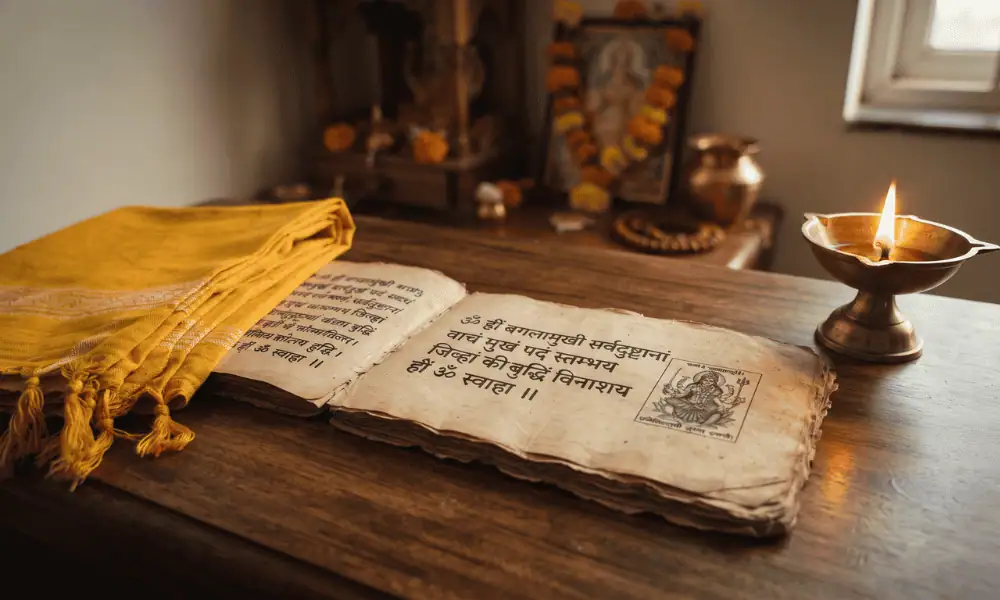
When we analyze the linguistics of the Bijakshara (seed syllable), we must look at the Veda-Mantra science. The ‘Ha’ component represents the Shiva principle, while the ‘La’ or ‘Ra’ component interacts with the Shakti aspect. In the specific case of Maa Baglamukhi, the ‘La’ sound is not merely an alternative to ‘Ra’; it holds the secret of ‘Stambhan,’ which is the fundamental attribute of the goddess. The ‘ee’ sound acts as the power of expansion and consciousness, creating a unified vibration that mirrors the stillness required to overcome duality. Thus, the distinction between Hrim and Hleem is not a matter of a simple spelling error, but a reflection of the specific shakti being invoked.
The Role of Transliteration in Modern Sadhana
The modern practitioner often encounters these variations through digital literature, where the Romanization of Sanskrit has led to varied interpretations. It is important to remember that Sanskrit is a Devanagari-based language. In the original script, the character used for the seed syllable is explicit. When this is translated, the nuance of the ‘La’ can sometimes be lost or merged with ‘Ra’ depending on the regional accent of the translator. This is why scholarly consensus often points back to the original script as the ultimate authority.
For the serious sadhaka, the visual representation in Devanagari script is the gold standard. If you are uncertain, look to the source material provided by your lineage or the traditional texts associated with the Ten Mahavidyas. By focusing on the visual and auditory origins rather than the English transliteration, you bypass the common confusion that plagues many online forums. The sound is the body of the goddess, and it remains unchanged regardless of how the Western alphabet attempts to capture it.
Choosing the Right Path in Sadhana
Spiritual practice is deeply personal, yet it thrives when anchored in traditional guidance. If you are starting your journey, the most effective approach is to receive the mantra from a qualified source or follow the pronunciation established by the lineage you are affiliated with. When you look at different resources, such as the Maa Baglamukhi Mantra, you will notice that the consistency of your practice often outweighs the minor differences in transliterated spelling.
The goal of reciting these sacred sounds is not to perfect the grammar of the English transcription, but to allow the vibration to permeate your consciousness. Whether one uses the spelling Hleem or Hreem, the underlying intent should always be one of devotion, surrender, and sattvik focus. Avoid the temptation to over-analyze the letters; instead, focus on the warmth and dedication you bring to the act of japa.
Furthermore, consider the environment of your sadhana. The resonance of a mantra is often amplified by the purity of the space and the mindset of the devotee. When the mind is free from the distraction of which ‘version’ is superior, the breath becomes steady, and the japa transitions from a mechanical recitation to an internal experience of union. It is in this state of absorption that the goddess reveals her presence, regardless of the linguistic labels applied by the intellect.
The Importance of Guidance and Devotion
While many seek definitive answers regarding the "correct" spelling, it is essential to remember that Maa Baglamukhi looks at the heart of the devotee. Vedic tradition suggests that purity of intention and consistent, steady practice are the true keys to spiritual growth. If you feel drawn to a particular form of the mantra, it is often because that specific resonance aligns with your personal spiritual rhythm. For those interested in the deeper structural components of her worship, including the significance of her various forms and rituals, our guide on who is Maa Baglamukhi provides a foundational understanding that can bring more clarity to your daily practice.
As you deepen your relationship with the Divine, you may find that the internal sound becomes more prominent than the external pronunciation. Let your japa be an act of love and service, performed with a quiet, focused mind. When the mind is still and the heart is pure, the specific nuances of the sound naturally fall into place through the grace of the Mother.
Ultimately, the sadhaka’s journey is one of gradual refinement. You may begin with a focus on pronunciation, but as your practice deepens, you will find that the mantra begins to resonate on its own within your heart. This is the stage where the distinction between Hleem and Hrim becomes a matter of divine experience rather than theoretical debate. Allow your practice to evolve naturally, and trust that the Mother is guiding your tongue and your spirit toward the vibration that is most beneficial for your unique spiritual evolution.
Frequently Asked Questions
Does the pronunciation change the effectiveness of the mantra?
In traditional practice, the focus is on the resonance and the sincerity of the practitioner. While correct pronunciation is encouraged to maintain the integrity of the sound, your devotion and the purity of your intent remain the most important elements of any mantra practice.
Why are there so many variations for the same Beej?
The variations arise primarily from the challenge of transliterating Sanskrit sounds into the Latin alphabet. Because Sanskrit utilizes phonemes that do not have perfect equivalents in English, different scholars and traditions have developed different ways to write these sounds, leading to variations like Hleem, Hreem, and Hrim.
Should I change my mantra if I find a different spelling?
Consistency is key in any spiritual practice. If you have been taught a specific form of the mantra by a guide or within your family tradition, it is generally recommended to continue with that practice. Do not be swayed by conflicting spellings found online; focus instead on the depth of your own devotional commitment.
How can I learn the correct way to recite the mantra?
The best way to learn is through the guidance of a knowledgeable practitioner or a respected tradition. You may also find it helpful to listen to recordings of authorized, traditional chants, which can help you internalize the correct vibrational quality of the Beej mantra. Consistent practice, rather than technical perfection, will bring the most clarity to your heart.
Does Baglamukhi Guru provide a way to download the mantra?
Yes, for those who wish to have a reference for their daily practice, we offer a downloadable Mantra PDF. This resource is designed to support your personal, daily recitation and maintain the traditional structure of the practice as part of your spiritual routine.
Conclusion
The question of Hleem, Hreem, or Hrim is ultimately a guidepost that leads the seeker toward a deeper inquiry into their own practice. As we navigate the complexities of Vedic traditions, let us prioritize the heart’s devotion above all else. Maa Baglamukhi is a manifestation of divine grace and stillness, and she responds to the sincerity of her children. May your practice be filled with peace, dedication, and the steady, quiet light of wisdom. Trust in your lineage, cherish the sound of the Mother’s name, and continue your japa with a steady, devoted heart.