
Accessing Your Baglamukhi Mantra PDF
For many devotees, having a structured, printed, or digital reference for sacred mantras is a deeply helpful part of their personal spiritual journey. At Baglamukhi Guru, we understand that practitioners often seek a clear, authentic version of the Baglamukhi Mantra that they can study, reflect upon, and keep for their daily devotional practice. To support your study, you may download the Baglamukhi Mantra PDF, which presents the traditional text in both Hindi and English for your convenience.
This resource is designed to provide clarity for those who are interested in the meditative and devotional aspects of Maa Baglamukhi. By having the text available in a readable format, you can focus more on the rhythm and pronunciation of the mantra, allowing for a more immersive and steady practice. Our aim is to provide access to these sacred words in a way that respects the depth of Vedic traditions while being accessible for international practitioners.
The Significance of Devotional Mantras
In the Vedic tradition, a mantra is far more than just a sequence of words; it is considered a sonic representation of divine energy. Maa Baglamukhi represents the power of Stambhana, often understood as the ability to still or pause the agitation of the mind. When a seeker engages with these mantras, they are not looking for a magical outcome or a quick fix to life’s challenges. Instead, the practice is an exercise in mindfulness, inner stillness, and the cultivation of a steady, unwavering focus that can help one navigate life’s complexities with grace and patience.
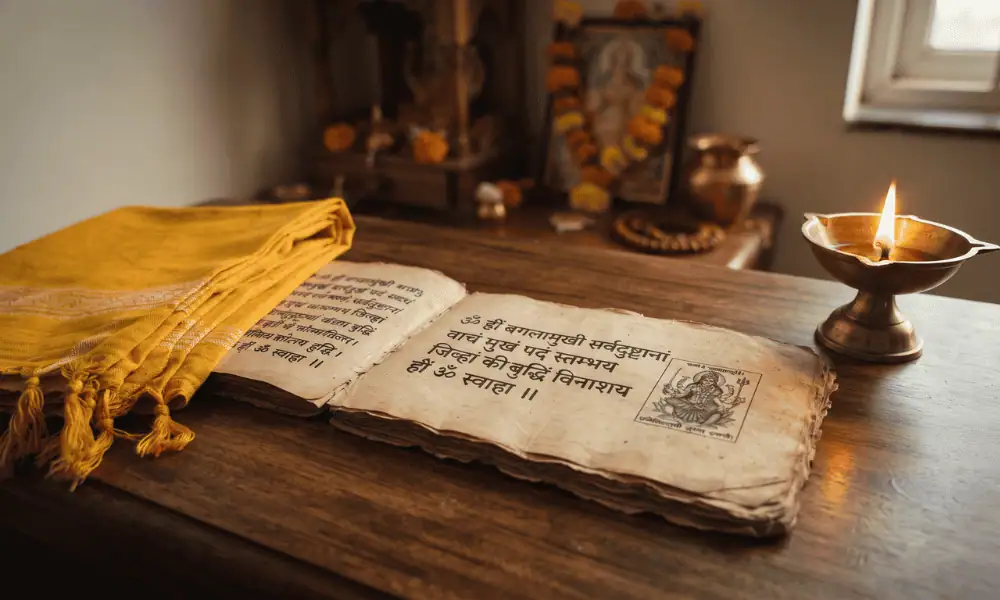
Devotional practices are rooted in the idea of building a relationship with the Divine. When you spend time with a mantra, you are essentially dedicating a portion of your day to introspection. This consistency helps quiet the noise of the external world, providing a sense of grounding that is essential in our fast-paced society. Whether you are reciting the mantra aloud or contemplating its meaning in silence, the intent behind your practice plays a significant role in your spiritual development.
Understanding Traditional Practice
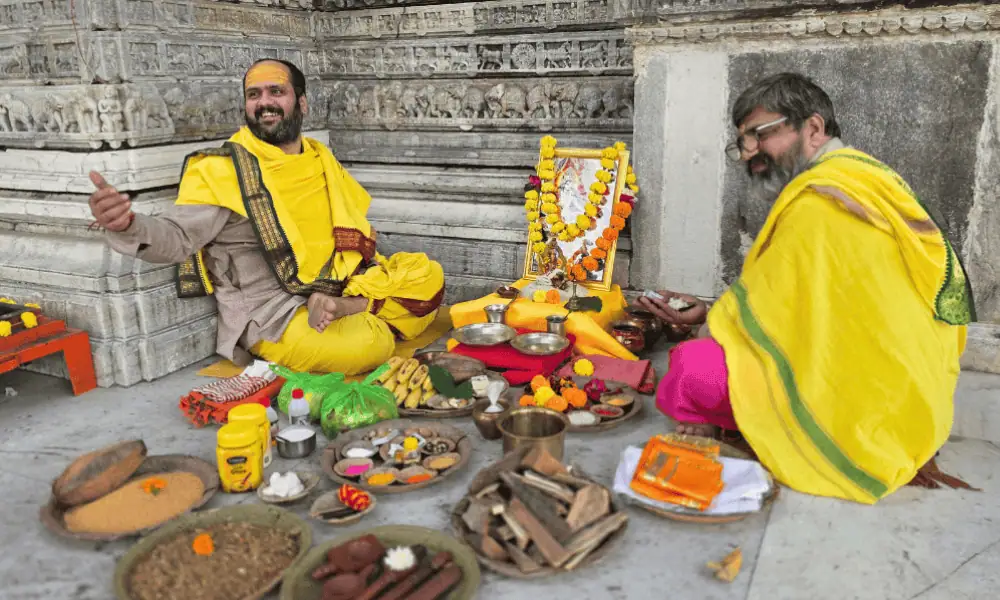
Entering the realm of traditional mantra practice requires patience and sincerity. Many beginners feel that they need to perform elaborate rituals to be heard, but the essence of devotion is often found in simplicity. A sattvik or pure approach emphasizes a clean space, a peaceful heart, and a clear mind. It is important to approach these traditions with respect, recognizing that they have been passed down through generations as tools for self-reflection and inner growth.
Before beginning any regular practice, it is helpful to familiarize yourself with the foundational concepts. Understanding who Maa Baglamukhi is and the symbolism behind her representation can add profound depth to your recitations. For a broader overview of her identity and the symbolic meaning of her form, you can visit our page on the meaning of Maa Baglamukhi. This context can help bridge the gap between simple repetition and a more profound understanding of the values that her worship encourages.
The Role of Sound and Vibration
Sound is considered the bedrock of creation in many ancient traditions, particularly within the study of the Mahavidyas. The Baglamukhi Mantra is not merely a linguistic construct but a specific arrangement of phonemes designed to create a particular frequency within the consciousness of the practitioner. When we study the text in the provided PDF, we are invited to consider the vibration of each syllable. This is why consistent practice is often recommended; the repetition allows the mind to attune itself to the underlying rhythm, eventually leading to a state where the seeker feels less scattered by the distractions of daily life.
The bilingual nature of the PDF ensures that even if one is not fluent in the Devanagari script, the phonetic transcription in English can help maintain the integrity of the sound. Accurate pronunciation is often emphasized in the scriptures, not for the sake of ritual perfectionism, but because the resonance of the sound is what facilitates the internal transition from agitation to stillness.
Cultivating Inner Stillness in Modern Times
Living in an era characterized by constant information flow, the concept of Stambhana takes on a modern relevance. It is not just about silencing others, but about silencing the incessant chatter of one’s own ego and anxious thoughts. The Baglamukhi Mantra serves as a psychological anchor. By dedicating time to look at the text, perhaps even reflecting on the meaning of each word, you create a sanctuary within yourself. This practice fosters a capacity to witness life events without being immediately consumed by reactive emotions. It is this psychological fortitude that is the true fruit of long-term mantra devotion.
Incorporating Mantras into Daily Life
Integrating a mantra into your daily routine does not require you to abandon your worldly duties. On the contrary, the clarity gained from a steady practice is meant to help you perform your daily responsibilities more effectively. By starting or ending your day with a period of focused attention, you create a space for calm that can persist even when you are faced with stressful situations. It is a way of anchoring your consciousness, keeping you balanced regardless of external circumstances.
When using your PDF resource, try to find a consistent time each day for your practice. It is better to have a short, sincere session every day than an irregular, rushed one. Many people find that early morning, often referred to as the Brahma Muhurta, is particularly conducive to meditative practices. During this time, the world is generally quiet, making it easier to center your thoughts and direct your attention toward your chosen mantra without distraction. Establishing a small, dedicated space—even if it is just a corner of a room—can further enhance your focus, signaling to your mind that this time is reserved for spiritual connection.
Responsible Devotional Approach
We believe it is important to remind our readers that mantras are aids for internal transformation, not substitutes for practical action. If you are facing legal issues, personal conflicts, or business challenges, please prioritize professional guidance, legal advice, and common-sense decision-making. Devotional practice is meant to complement your human efforts by providing you with the inner fortitude and calm needed to make better choices and deal with stress. It should never be treated as a way to force outcomes or manipulate situations. True devotion is about aligning oneself with the divine will, not compelling the universe to serve personal desires.
Furthermore, one should be wary of any advice suggesting that mantra practice replaces the necessity of moral behavior. The path of the seeker is intrinsically linked to the cultivation of virtues such as truthfulness, compassion, and humility. Mantras, when practiced alongside a life of ethical conduct, act as a catalyst for deeper realization, helping to remove the veils of ignorance that cloud our perception of the truth.
The Importance of Consistency and Patience
In the path of spiritual growth, there is no substitute for patience. Many seek immediate relief or sudden realizations, but the wisdom of the ancients suggests that the most profound changes occur slowly, over years of dedicated practice. When you use the Baglamukhi Mantra PDF, view it as a companion for the long term. There may be days when your mind feels exceptionally calm and others where it feels turbulent; both are part of the process. The discipline of sitting down to read or recite the mantra, regardless of your state of mind, is the foundational building block of spiritual development. It is the steady flame of commitment that eventually illuminates the deeper aspects of the practice.
Frequently Asked Questions
Is it necessary to have a formal initiation to recite the Baglamukhi mantra?
While many traditions encourage guidance from an experienced practitioner or teacher, there is a long-standing practice of individuals reciting mantras with pure intent and a respectful heart. If you are starting, focus on building a consistent, gentle practice. If you find your interest deepening, seeking guidance from a traditional teacher can provide valuable insight into the nuances of the practice.
How long should I recite the mantra each day?
There is no fixed duration mandated for your practice. It is far more effective to practice for a shorter time with genuine focus and regularity than to perform a long, distracted recitation. Start with a duration that feels comfortable for you, such as 10 to 15 minutes, and maintain that consistency for a period of time before considering any changes.
Can I read the mantra from the PDF while I am traveling?
Yes, the benefit of having a digital PDF is that it is portable. You can certainly read the mantra while traveling or away from home. The most important factor is the sincerity of your heart and the quality of your focus, rather than the physical setting of your practice.
Should I follow any specific rituals before starting my practice?
Maintaining a clean and respectful environment is generally recommended. A simple, quiet space is sufficient. Before beginning, many practitioners spend a few moments in silence to clear their minds. If you wish to learn more about the formal, traditional way to approach worship, you may find our detailed guide on Baglamukhi Puja to be very helpful in understanding the broader scope of these devotional customs.
Are there any restrictions on who can study or recite these mantras?
Devotion is a universal human experience. Our resources are provided for those who are drawn to the path of Maa Baglamukhi with a sincere heart and a desire for inner growth. Approach the study of these mantras with respect for the tradition, a calm disposition, and an open, learning-oriented mindset.