
The Significance of the Baglamukhi Mantra
The pursuit of inner stillness and the silencing of internal noise is a central theme in many Vedic traditions. When devotees look for the Baglamukhi Mantra in English (Roman lyrics), they are often seeking a bridge between the ancient Sanskrit vibrations and their own daily practice. Maa Baglamukhi represents the divine power of stillness, discernment, and the ability to pause the chaos of the mind. By engaging with this mantra, practitioners aim to align themselves with these qualities, fostering a sense of inner clarity that transcends the external distractions of modern life.
It is important to understand that a mantra is not merely a collection of words or a sequence of sounds. In the tradition of Baglamukhi Guru, a mantra is viewed as a living energy form. When you recite the Baglamukhi Mantra in English (Roman lyrics), you are participating in a meditative process that requires attention, sincerity, and a respectful heart. The transliteration serves as a useful guide for those who may not be fluent in Devanagari, allowing them to focus on the rhythm and the internal intent of the practice. The mantra is a tool for self-realization, helping the practitioner bridge the gap between their everyday consciousness and the higher, unchanging silence embodied by the Goddess.
The Phonetic Essence of the Practice
The phonetics of the Baglamukhi Mantra are deeply embedded in the ancient Vedic science of sound, known as Mantra Yoga. Every syllable carries a specific vibration meant to resonate with the subtle energy centers of the human body. When chanting in Roman lyrics, the primary goal is to maintain the cadence and the tonal balance of the original Sanskrit. This process of sound-based meditation serves to quiet the ‘monkey mind,’ or the constant chatter of the ego. By focusing intently on the pronunciation, the practitioner effectively directs their mental energy into a single, cohesive focal point, naturally leading to a state of meditative absorption.
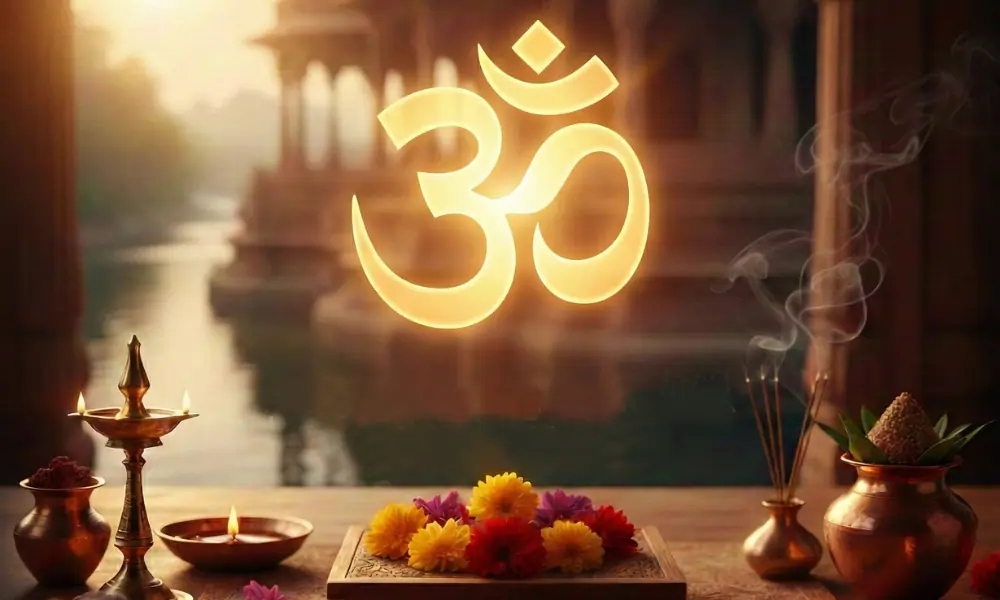
Devotees often find that as they repeat the mantra, the boundaries between the sound, the listener, and the object of devotion begin to blur. This is the intended effect of the practice. The Roman transliteration acts as a supportive framework; while it may not capture every microscopic nuance of the Sanskrit script, it successfully conveys the fundamental intent and the rhythmic pulse necessary to sustain a deep meditative state. As you practice, prioritize the steadiness of your voice and the clarity of your thought, ensuring that each repetition acts as a rhythmic step toward deeper silence.

Approaching the Mantra with Respect
In the Vedic path, the approach to a deity is as important as the chanting itself. Devotion is characterized by a sattvik, or pure, state of mind. Before you begin any practice, it is beneficial to create a quiet space where you can sit comfortably and undisturbed. The goal is not to perform a task to gain a specific outcome, but to cultivate a space of devotion where you can sit with the presence of the Divine. For those looking to deepen their understanding of how these practices fit into a balanced life, you can explore more about who is Maa Baglamukhi and the symbolism associated with her form.
Consistency and patience are the hallmarks of a committed practitioner. Instead of focusing on the duration of a session or the quantity of repetitions, many teachers suggest focusing on the quality of each breath and each sound. As you recite the Baglamukhi Mantra in English (Roman lyrics), allow the sound to resonate within you. If your mind wanders, gently bring your focus back to the sound, acknowledging the thought without judgment. This process of returning to the mantra is, in itself, a form of spiritual discipline that helps in training the mind. By remaining patient with the process, you allow the practice to naturally deepen over time, moving from a mechanical recitation to an internalized experience of peace.
The Role of Roman Lyrics in Modern Practice
The use of Roman lyrics (transliteration) is a pragmatic adaptation for the modern, international seeker. While the original Sanskrit script contains the unique phonetic vibrations necessary for the most traditional forms of chanting, Romanization allows seekers worldwide to participate in these traditions without linguistic barriers. When using the Baglamukhi Mantra in English (Roman lyrics), one should try to emulate the correct pronunciation as closely as possible. The rhythm of the mantra is designed to create a specific resonance, and while accuracy is helpful, the most essential ingredient remains the purity of intention and the sincerity of your heart.
For those who wish to have a portable reference for their daily discipline, we offer a downloadable version of the mantra. This resource can help you stay grounded in your practice, providing a reliable text to follow during your meditation. Having a consistent guide ensures that your practice remains steady and focused, even during times when you may feel less connected or more distracted. Remember that these resources are tools to assist your spiritual journey, not substitutes for the inward work that happens when you sit in silence. By utilizing these tools, you are honoring the lineage of the practice while making it accessible for your personal journey in the present day.
The Virtue of Discipline in Meditation
Discipline in the context of spiritual practice is not about rigidity; rather, it is about setting a consistent rhythm that honors your intention. When you commit to a daily period of meditation with the Baglamukhi Mantra, you are signaling to your psyche that this time is sacred and dedicated to higher awareness. Establishing a fixed time and place for this practice can significantly aid in maintaining your resolve. Over time, the environment itself becomes charged with the energy of your devotion, making it easier to slip into a meditative state the moment you sit down.
Furthermore, it is helpful to approach the mantra as a conversation with the Divine. When you engage with the Roman lyrics, treat them as sacred language. Even if you are not fluent in Sanskrit, the vibration you create through sound carries the weight of thousands of years of tradition. This connection links you to an unbroken chain of seekers who have utilized these same sounds to achieve clarity and peace. Approach your practice with humility, knowing that you are walking a path that has been refined by wisdom and tradition, and that your own presence and sincerity are the true foundations of your progress.
Integrating Devotion into Daily Life
Practicing the Baglamukhi Mantra is not confined to the moments you spend sitting in meditation. The essence of the mantra is meant to permeate your daily actions, leading to a life characterized by thoughtfulness and presence. By dedicating time each day to this practice, you slowly change your perspective, learning to respond to life’s challenges with a calm, discerning mind. Many practitioners find that their meditation influences their work, their relationships, and their overall well-being, helping them navigate life with greater patience.
As you deepen your practice, you may find it helpful to integrate other traditional elements of devotion. Whether it is through the study of stotrams or the simple act of lighting a lamp, these rituals serve to anchor your focus. You can find comprehensive guidance on how to perform a proper Baglamukhi Puja to support your home practice. By combining the recitation of the mantra with other devotional acts, you create a holistic rhythm that supports your long-term spiritual growth and maintains a respectful, traditional atmosphere in your home. Let your spiritual practice be a living, breathing component of your life, extending the silence you find on the cushion into the noise of the world.
Frequently Asked Questions
Is it necessary to learn the original Sanskrit to practice the mantra?
While Sanskrit is the original language of the mantras and contains specific vibrational qualities, learning the language is not a strict prerequisite for beginning your practice. Using the Baglamukhi Mantra in English (Roman lyrics) is a widely accepted way for international seekers to engage with the sounds. The most important elements are your sincerity, respect, and the regularity of your practice.
How long should I practice the mantra every day?
There is no fixed requirement for the duration of your practice. It is far more beneficial to practice for a shorter amount of time with full focus and devotion than to spend hours in a state of distraction. You may start with five or ten minutes, gradually increasing the time as you become more comfortable and accustomed to the practice.
Can the mantra be practiced by anyone?
The practice of chanting and meditation is a personal journey of spiritual seeking. Anyone with a respectful heart and a sincere intention can engage with the mantra. The Vedic tradition is inherently inclusive of those who seek truth, stillness, and a deeper connection with the Divine.
Does the mantra guarantee specific results in my life?
It is essential to understand that mantras are tools for inner transformation rather than instruments for material gain or external control. The practice is intended to refine your mind, improve your discernment, and foster a peaceful inner state. We do not promote the idea of guaranteed outcomes or magical solutions to complex life circumstances.
Should I use a mala while chanting the mantra?
Using a mala (prayer beads) is a traditional practice that can help you maintain count and keep your focus from wandering. However, it is not strictly mandatory. Some people prefer to chant for a certain length of time rather than a specific number of repetitions. Do what feels most natural and supportive for your personal meditation routine.