
Introduction to the Stambhan Energy
In the vast landscape of Vedic wisdom, the eighth Mahavidya, Maa Baglamukhi, represents the powerful force of stillness and clarity. Among the various aspects of Her worship, the concept of Stambhan is often discussed by seekers of spiritual depth. The term Stambhan is derived from the Sanskrit root stambh, which refers to the act of stopping, paralyzing, or rendering immobile. When we speak of the Baglamukhi Stambhan Mantra and Its Meaning, we are essentially exploring a transformative discipline aimed at stilling the turbulence of the mind and the distracting influences of the external world.
Devotion to Maa Baglamukhi is rooted in the pursuit of truth. In the traditional Vedic context, this energy is not about external control or manipulation, but rather about mastering one’s own internal perceptions. By practicing the mantra with a sincere and sattvik heart, a practitioner seeks to achieve a state of inner poise where the mind remains steady, regardless of the chaos that may exist in the environment. This stillness is not a void; it is a highly charged state of pure consciousness where the intellect (buddhi) is freed from the distorting filters of desire, anger, and fear.
The Concept of Stambhan in Vedic Tradition
Stambhan is one of the various powers attributed to the divine feminine in the Tantric and Vedic traditions. It is frequently misunderstood as a mechanism for controlling others. However, from a classical spiritual perspective, the true essence of Stambhan lies in self-mastery. It is the ability to halt the scattered tendencies of the ego—such as anger, arrogance, and impulsive reactions—that prevent a person from seeing the objective reality of a situation.
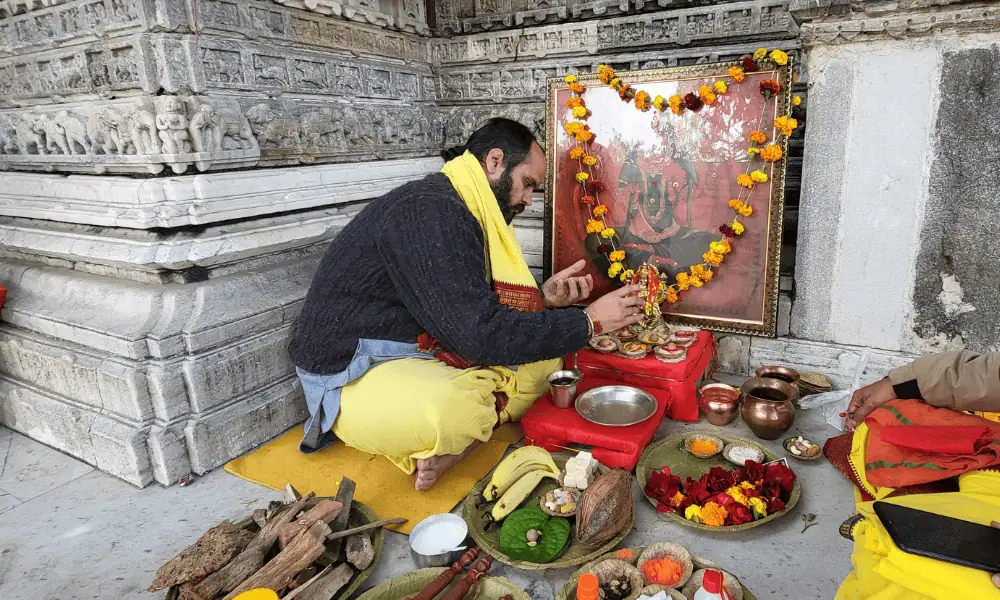
When a seeker focuses on the Baglamukhi Stambhan Mantra and Its Meaning, they are inviting the grace of the Mother to help them pause their own cognitive biases. This mental stillness allows for profound reflection and clarity. In spiritual life, this is considered a form of protection. When our minds are not easily swayed by confusion or falsehood, we are naturally protected from the negative consequences that arise from clouded judgment and hasty decisions. In the context of ancient scriptures, Stambhan is akin to the pause button of the soul, allowing the practitioner to witness their thoughts without being swept away by them. This requires not only dedication but also a deep understanding of the transient nature of the external world versus the permanence of the divine within.
The Philosophical Depth of Stillness
To fully grasp the Stambhan aspect, one must look at the nature of ‘stasis’ in the Vedic paradigm. In a world characterized by constant movement, agitation, and sensory bombardment, the ability to arrest this movement is a highly advanced state of yoga. The Baglamukhi Sadhana does not seek to suppress the world, but to provide the practitioner with an impenetrable shield of equanimity. When we look at the mythology associated with the Goddess, we see Her holding the tongue of the demon, symbolizing the silencing of the false, the unnecessary, and the chaotic. This represents the ultimate power of Stambhan—the silencing of the ‘inner noise’ that prevents us from realizing our true potential. As you delve deeper, consider how this stillness acts as a mirror, reflecting one’s own intentions and motivations with complete transparency.
Understanding the Mantra and Its Significance
The core of Baglamukhi sadhana involves the recitation of mantras dedicated to the Mother. These sounds are believed to resonate with specific energies within the subtle body. While many seekers look for a specific ‘Stambhan Mantra’, it is important to remember that all authentic mantras associated with Maa Baglamukhi are designed to facilitate this process of stilling the mind. To begin your journey, you may want to learn more about the Meaning of Maa Baglamukhi to better understand the deity behind the practice.
The efficacy of any mantra practice, including those focused on the Stambhan aspect, rests heavily on the practitioner’s discipline, sincerity, and consistency. In the Vedic tradition, it is emphasized that the mantra should be approached with reverence rather than as a transactional tool. The goal is to align one’s inner state with the stillness of the Goddess, thereby attaining a state of equanimity that remains unshaken even during life’s most challenging moments. Sound, or Nada, is considered the fundamental building block of creation in the Vedas. When a seeker chants with correct pitch and focus, they are not merely reciting words; they are tuning their mental frequency to match the profound stillness of the cosmic mother, effectively creating a ‘stambhan’ or anchoring effect within their own psyche.
Practical Approach to Mantra Sadhana
Engaging in the recitation of any powerful mantra requires a foundational understanding of one’s own intention. Before beginning any regular practice, it is beneficial to establish a routine that honors the sanctity of the tradition. This includes setting aside a quiet space, maintaining physical and mental cleanliness, and approaching the session with a calm, meditative focus.
Many practitioners find that incorporating traditional elements such as lighting a lamp or offering simple, heartfelt prayers enhances their internal connection. It is not the complexity of the ritual that brings results, but the purity of the connection between the seeker and the divine. For those who wish to deepen their practice, understanding the traditional approach to the Baglamukhi Mantra provides a useful roadmap for correct pronunciation and attitude, ensuring that the practice remains supportive of your spiritual growth rather than a source of stress. It is crucial to maintain a sattvik (pure) lifestyle, as the environment in which you perform your practice serves as a container for the energy you cultivate. A balanced diet, consistent sleep, and a peaceful environment are not merely recommendations; they are essential scaffolds for the sustained practice of this sacred art.
The Role of Guidance and Discernment
Spiritual paths, especially those involving the deeper Mahavidya traditions, are best navigated with patience. It is common for new seekers to feel overwhelmed by the vast array of information available. The most reliable path is one of gradual learning and consistent daily practice. Avoid the trap of seeking instant ‘fixes’ or magical results. Instead, focus on the gradual, subtle changes in your character and your ability to remain calm in difficult situations.
As you explore the Baglamukhi Stambhan Mantra and Its Meaning, remember that the ultimate fruit of this sadhana is the liberation of the mind from its own limitations. Whether you are dealing with a stressful professional situation or internal emotional conflicts, the power of stillness helps you navigate through the noise of daily life with dignity and awareness. If you are just beginning your path, consulting established traditional Puja guidance can help ensure that your efforts are aligned with historical and devotional norms. Discernment is your greatest tool on this path; learn to distinguish between the superficial desire for power and the authentic spiritual yearning for divine stillness. When your practice is grounded in devotion and supported by traditional understanding, the results manifest naturally as a permanent transformation of your internal landscape.
The Progressive Nature of Spiritual Growth
The journey with Maa Baglamukhi is a long-term commitment. In the early stages, one may find it difficult to maintain the mental stillness that Stambhan demands. Do not let this discourage you. The struggle against the wandering mind is part of the purification process. Each time you return your focus to the mantra, you are strengthening your mental capacity for stillness. Over time, this discipline integrates into your daily life. You may notice that situations that once provoked intense emotional outbursts no longer hold the same sway over you. This is the manifestation of the Stambhan energy beginning to take root. By keeping your heart open and your dedication steady, you are creating a sanctuary within yourself that remains undisturbed by the volatility of the outer world.
Conclusion
The practice surrounding the Baglamukhi Stambhan Mantra is essentially a journey inward. It is a commitment to achieving the stillness of mind that allows for clarity, truth, and peace. By focusing on the true meaning of Stambhan—the silencing of the ego and the quieting of the scattered mind—a seeker can transform their approach to life’s obstacles. Maintain a respectful, steady, and devoted practice, and allow the divine grace of Maa Baglamukhi to guide your steps toward greater wisdom and self-control. Through this sacred discipline, you learn that the greatest power does not lie in controlling the world around you, but in having the unshakable strength to remain the witness of your own consciousness, steady and serene amidst the turning tides of life.
Frequently Asked Questions
Is the Baglamukhi Stambhan Mantra meant for controlling other people?
No. In the authentic Vedic tradition, the practice of Stambhan is understood as a process of self-mastery. It is about stilling one’s own mind, overcoming internal turbulence, and gaining the clarity to act with wisdom. Using spiritual practices to coerce or control others contradicts the principles of dharmic growth and sattvik devotion.
How can I learn the correct pronunciation of the mantras?
Correct pronunciation is vital in Vedic practice to maintain the resonance of the sounds. It is highly recommended to learn directly from a knowledgeable guide or teacher who understands the tradition. You can also listen to recorded audio from reputable sources or study established manuals that explain the rhythmic structure of the mantras, ensuring you practice with care and respect for the tradition.
Are there any negative side effects if the mantra is performed incorrectly?
Spiritual practices are designed to cultivate peace and clarity. In the tradition of Baglamukhi Guru, we emphasize that when practices are done with a sincere, humble, and respectful heart, they generally lead to positive inner growth. If you feel overwhelmed or confused, it is best to simplify your practice, focus on basic devotion, and seek the guidance of a qualified practitioner who can help you refine your approach.
How long does it take to see the results of the mantra practice?
Spiritual development is a personal and gradual journey. Rather than focusing on a timeframe for ‘results,’ it is more beneficial to focus on the consistency and quality of your daily devotion. Over time, many practitioners report a greater sense of inner calm, improved focus, and a more stable emotional state. Approach the practice as a lifelong commitment to growth rather than a quest for immediate outcomes.