
Introduction to the Concept of Akarshan
In the vast ocean of Vedic knowledge, the study of mantras is often approached with a mix of curiosity and reverence. Among the various categories of sacred sounds, those associated with the concept of Akarshan—often translated as attraction or pulling—hold a distinct place in traditional thought. When we speak of the Baglamukhi Akarshan Mantra, we are entering the realm of a practice deeply connected to the energy of Maa Baglamukhi, the eighth Mahavidya. For the dedicated practitioner, understanding these mantras is not about seeking control over others, but rather about aligning one’s own internal energy with the stabilizing and silencing power of the Divine Mother.
As we explore this subject through the lens of Baglamukhi Guru, it is vital to approach the topic with a sattvik or pure mindset. The tradition of Maa Baglamukhi is renowned for its ability to cut through duality and confusion. Akarshan, in its highest spiritual expression, is not the manifestation of external coercion, but the process of drawing one’s own wandering mind back to the center—toward the stillness of the Atman. This article aims to clarify the traditional significance of such practices while maintaining a respectful and grounded approach to Vedic spirituality.
The Nature of Maa Baglamukhi’s Energy
To understand the intent behind any mantra associated with Maa Baglamukhi, one must first understand the Goddess herself. She is often referred to as the Stambhana Devi, the power that stops or freezes the movement of ignorance. Her iconography, showing her pulling the tongue of a demon, is a profound symbol of the silencing of false speech and the cessation of the ego’s restless chatter. Understanding the true meaning of Maa Baglamukhi is essential for anyone interested in her sadhana. She represents the absolute clarity that emerges when the distractions of the world are suspended.
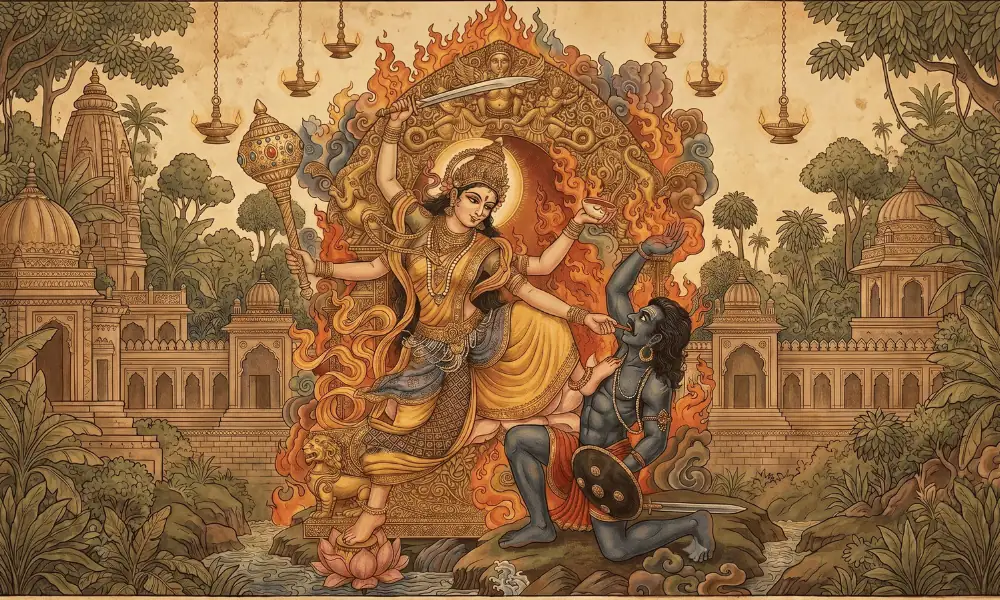
When we discuss Akarshan in this specific context, the focus is typically on the ‘attraction’ of positive consciousness or the ‘drawing’ of the intellect away from negative patterns. Traditional Vedic practitioners view these mantras as tools to clear obstacles—be they internal doubts or external complications—so that the truth may be perceived clearly. This process is inherently protective rather than aggressive. It is about restoring balance where there is chaos, rather than imposing one’s will upon the free agency of another individual.
The Traditional Significance of Mantras
Mantras are not mere words or magical formulas that trigger instant, external results. They are vibrational tools that, over time, cultivate a specific resonance within the practitioner. The Baglamukhi Akarshan Mantra is deeply rooted in this understanding. The efficacy of such a practice depends heavily on the sincerity of the devotee, the clarity of their intention, and their commitment to a disciplined lifestyle. In the Vedic tradition, it is understood that the fruits of a mantra are the result of the transformation of the practitioner’s own psyche.
Devotees who engage in this path often do so to cultivate mental focus and to overcome the agitation caused by modern life. When the mind is scattered, it is difficult to maintain a spiritual practice or even to handle mundane challenges. The practice of focusing on a mantra is, in itself, an exercise in attraction—attracting one’s own focus to the Divine. By practicing consistently, the devotee seeks to anchor their consciousness in the stabilizing presence of the Mother, allowing them to face their life’s circumstances with composure and wisdom.
Approaching the Sadhana Responsibly
It is important to emphasize that no spiritual practice replaces the necessity of practical action in one’s daily life. If an individual is navigating a legal difficulty, a strained relationship, or a professional hurdle, the mantra is intended to provide the mental clarity and moral strength required to handle those situations maturely. It does not act as a substitute for professional counsel, legal advice, or open, honest communication between individuals. The reliance on divine grace should always be balanced with human effort, known in our traditions as Purushartha.
Many seekers are drawn to the idea of a quick, mystical solution to their troubles. However, the path of the Mahavidyas is one of long-term purification. There are no shortcuts that replace the need for ethical conduct and personal accountability. When approaching any form of mantra practice, it is advised to do so with a heart free from ill-will. The goal of the devotee should always be the elevation of consciousness rather than the acquisition of power over others. Using sacred sounds for coercive or manipulative purposes is contrary to the sattvik principles that govern authentic Vedic practice.
The Role of Disciplined Devotion
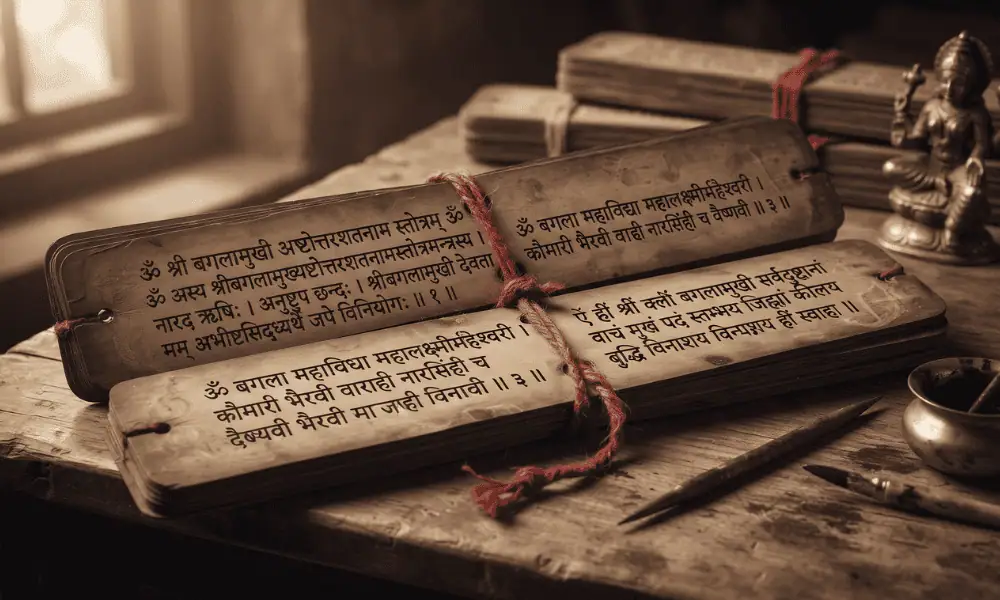
In the tradition, the practice of a mantra is often complemented by regular puja or, in some cases, a traditional Baglamukhi puja to cultivate a deeper connection with the deity. This structured approach helps the practitioner maintain regularity and reverence. Whether one is reciting a stotram, performing a personal ritual, or simply sitting in silent contemplation, the primary goal is to foster a sense of surrender. Through this surrender, the devotee acknowledges that the ultimate power lies not in their own desire, but in the divine flow of the universe.
Consistency, purity of diet, and honesty in speech are considered the foundation of any successful mantra sadhana. When the body and mind are prepared through these lifestyle choices, the practice of the mantra becomes more meaningful and effective. It is in this state of preparation that the practitioner truly begins to understand the nuances of their practice, moving beyond mere labels and into an experiential relationship with the Divine Mother.
Conclusion
The Baglamukhi Akarshan Mantra, when understood within the bounds of traditional Vedic practice, is a tool for self-realization and mental equilibrium. It invites the devotee to move past the noise of external desires and focus on the internal clarity that is the essence of Maa Baglamukhi. By maintaining a path of righteousness and devotion, one can use these ancient practices to strengthen their character and navigate life’s complexities with grace. We encourage all seekers to approach the Mahavidya sadhana with respect, patience, and a humble heart, recognizing that the greatest transformation occurs within oneself.
Frequently Asked Questions
Is the Baglamukhi Akarshan Mantra intended to control others?
In authentic Vedic traditions, mantra practice is intended for internal purification and spiritual growth. It is not used to exert control over the free will or actions of other people. Using spiritual practices for such intentions is generally considered contrary to the ethical principles of a sattvik life.
Can a mantra provide guaranteed solutions to life’s problems?
Mantras are tools for mental and spiritual focus, not magical solutions or guarantees. While they can help cultivate the peace and clarity needed to address difficulties, they do not replace the need for practical actions, professional help, or personal responsibility in dealing with real-world situations.
What should be the primary mindset when practicing this mantra?
The primary mindset should be one of devotion, humility, and sincerity. A practitioner should seek to align their consciousness with the stillness and wisdom represented by Maa Baglamukhi, rather than focusing on personal gain or the manipulation of external events.
Are there prerequisites for starting a mantra practice?
While everyone may call upon the Divine, it is recommended to cultivate a disciplined, ethical, and pure lifestyle before engaging in advanced or specific mantra practices. Many practitioners find it beneficial to start with basic traditional mantra study and to establish a consistent, respectful routine before committing to intensive sadhana.
How long does it take to see results from a mantra?
The duration and nature of the results depend on the individual’s dedication, their existing karmic patterns, and the sincerity of their effort. Vedic practice is a journey rather than a race, and the focus should remain on the process of refinement and growth rather than the expectation of immediate or specific external outcomes.